Quick Answer
Coconut milk is one of the most important ingredients in Sri Lankan cooking. It is made from the flesh of mature coconuts and is used to add richness, creaminess and flavour to curries, dhal, gravies and other traditional dishes. Sri Lankan cooks may use coconut milk at different strengths depending on the recipe, from lighter milk for cooking ingredients to thicker coconut milk for creating a rich finish.
Introduction
If you’ve been following our Sri Lankan cooking guides, you’ve probably noticed one ingredient appearing again and again.
Coconut.
It’s in Pol Sambol.
It’s mixed into Pittu.
And coconut milk appears in dhal, vegetable curries, fish curries, Kiri Hodi and countless other dishes.
For many Sri Lankan families, coconut milk isn’t something reserved for an occasional recipe. It’s simply part of everyday cooking.
The creamy flavour can soften chilli, bring spices together and turn a few simple vegetables into a comforting curry.
But if you’re new to Sri Lankan food, coconut milk can also be confusing.
Should you use thick or thin coconut milk?
When should you add it?
Does every Sri Lankan curry contain coconut milk?
Let’s make it simple.
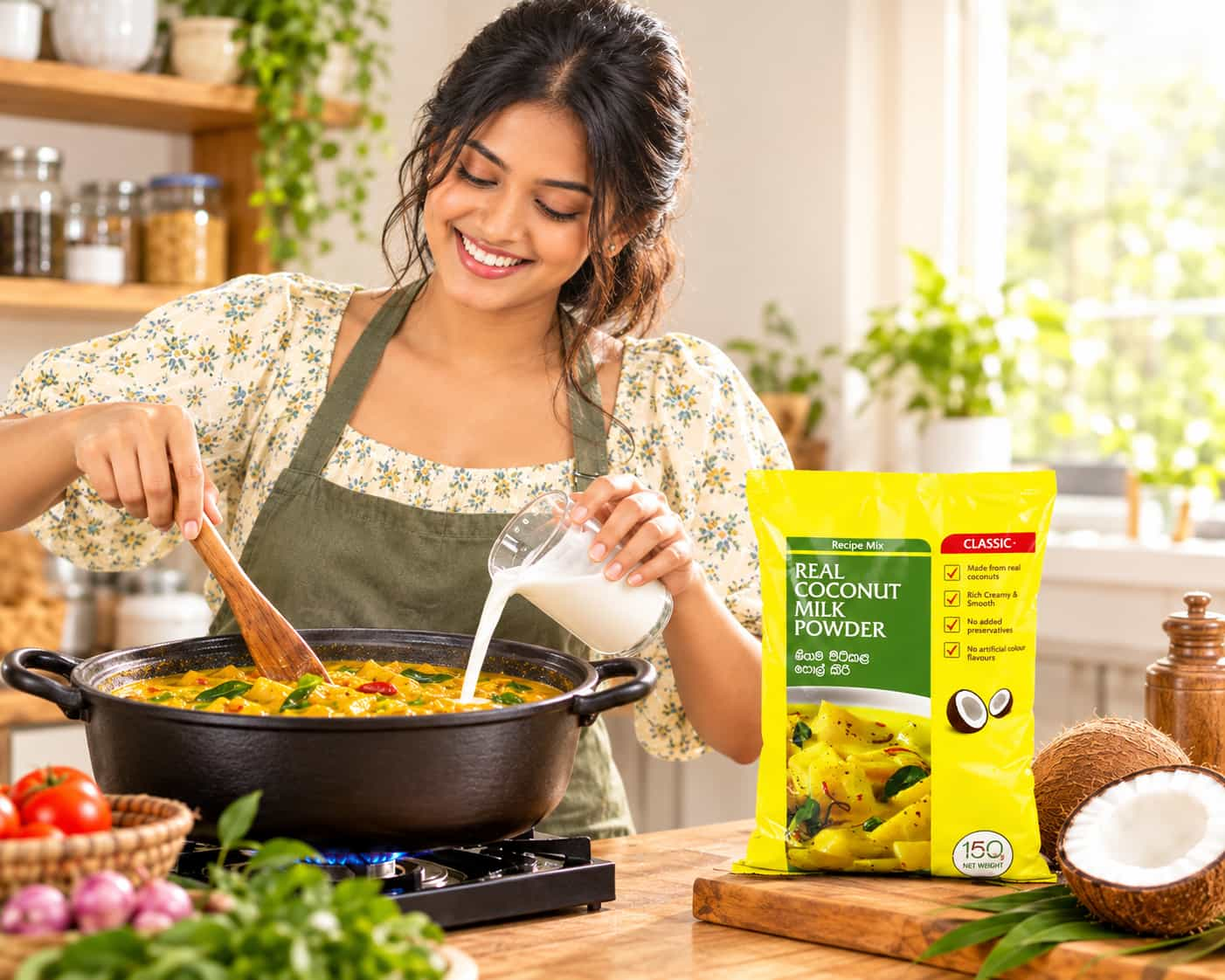
What Is Coconut Milk?
Coconut milk is a creamy liquid produced from the flesh of mature coconuts.
Traditionally, fresh coconut is grated and combined with water before being squeezed to extract the milk.
The first extraction is richer and thicker. Additional water can then be added to the coconut and squeezed again to produce a thinner milk.
This distinction is useful in Sri Lankan cooking because different stages of a recipe may call for different strengths of coconut milk.
Today, packaged coconut milk makes the process much more convenient, especially for Sri Lankans living abroad.
Why Is Coconut Milk So Important in Sri Lankan Cooking?
Sri Lanka has a tropical climate where coconut has traditionally been widely available. Over generations, it became part of an enormous range of foods.
Coconut milk is particularly useful because it does several things at once:
- It adds richness.
- It carries spices.
- It creates gravy.
- It balances chilli.
- It gives many Sri Lankan curries their familiar creamy texture.
Take away coconut entirely and a large part of Sri Lankan home cooking would feel very different.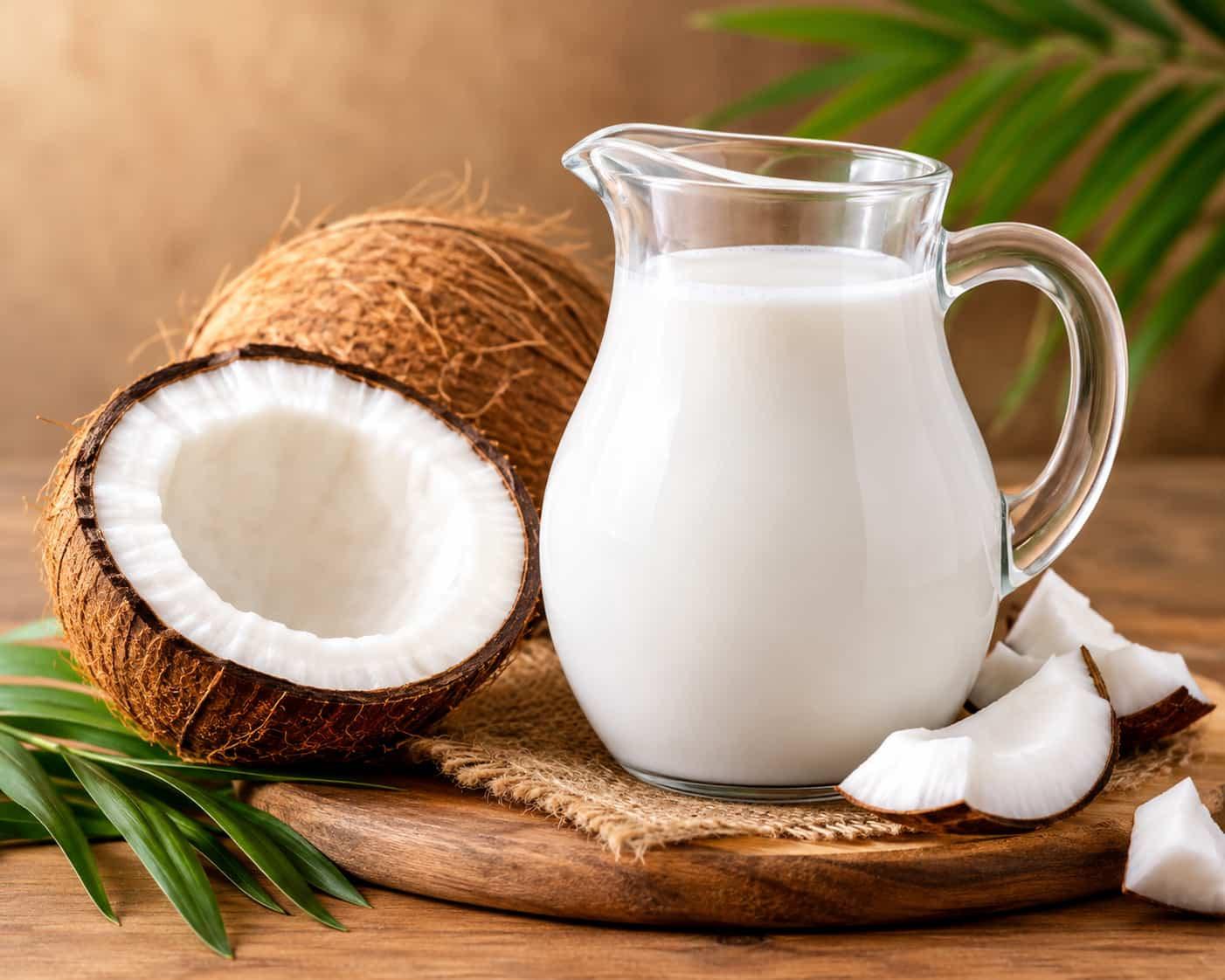
Thick Coconut Milk vs Thin Coconut Milk
If you’ve ever watched someone cook a traditional Sri Lankan curry, you may have heard them talk about different strengths of coconut milk.
Understanding this makes many recipes much easier.
Thin Coconut Milk
Thin coconut milk contains more water and has a lighter consistency.
Traditionally, it can be produced from a later extraction after the richer coconut milk has already been removed.
It is useful when ingredients need time to cook in liquid. Vegetables, lentils and other ingredients can simmer in the thinner milk while absorbing flavour.
Thick Coconut Milk
Thick coconut milk is richer and creamier.
Traditionally, this comes from the first extraction of grated coconut. It is often added later in the cooking process when you want richness and a creamy finish.
Because it is more concentrated, you usually don’t need as much liquid to notice the coconut flavour.
Is Coconut Milk the Same as Coconut Cream?
Not exactly.
Coconut milk and coconut cream are related, but coconut cream is generally more concentrated and has a higher proportion of coconut solids. That makes it noticeably thicker and richer.
Depending on the product available to you, coconut cream may be useful for particular recipes, but it isn’t automatically interchangeable with coconut milk in every dish.
Always check what your recipe requires and look at the instructions on the product you’re using.
How Is Coconut Milk Used in Sri Lankan Curries?
This is where coconut milk becomes incredibly versatile.
It can be used with lentils, vegetables, fish and many other ingredients.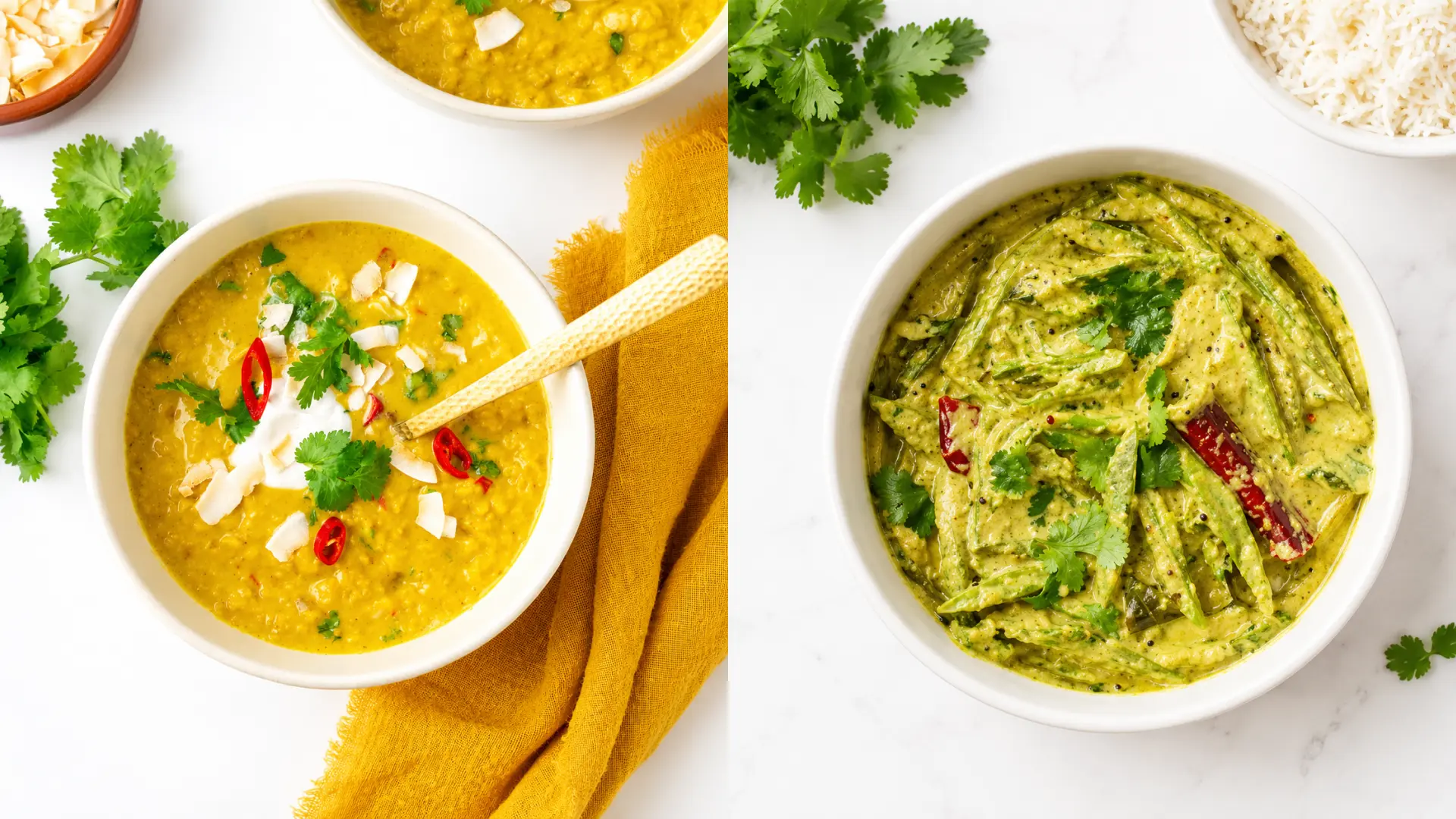
Dhal Curry
One of the easiest examples is Sri Lankan dhal curry.
Red lentils are cooked with ingredients such as turmeric, onion, chilli and curry leaves. Coconut milk adds creaminess and helps bring everything together.
The result is mild enough to work alongside stronger curries but flavourful enough to enjoy with rice or bread on its own.
If you’re new to Sri Lankan cooking, dhal is one of the best dishes for learning how coconut milk works in a curry.
Vegetable Curries
Coconut milk is used in many Sri Lankan vegetable curries.
Depending on the recipe, vegetables may be cooked with spices and a lighter coconut milk before richer coconut milk is added towards the end.
The result can be surprisingly flavourful considering how simple the ingredients are.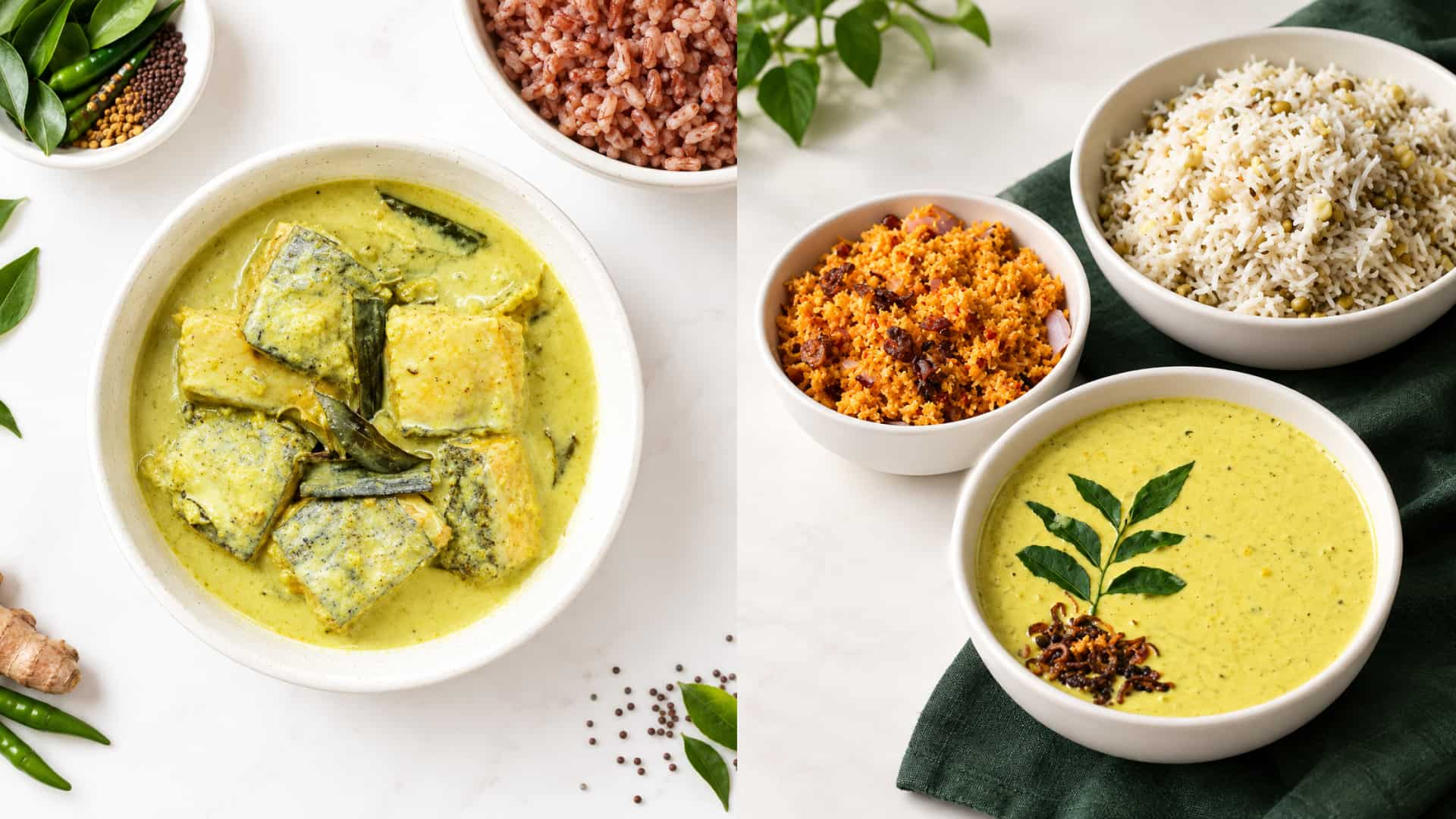
Fish Curry
Some Sri Lankan fish curries use coconut milk to create a creamy gravy. Others don’t use it at all.
That’s an important distinction.
Sri Lankan fish curry isn’t one single recipe. A coconut-based fish curry can be creamy and rich, while Goraka-based preparations can have a completely different sour and spicy character.
Our Sri Lankan Fish Curry guide explores those differences in more detail.
Kiri Hodi
Kiri Hodi is perhaps one of the clearest examples of coconut milk taking centre stage.
It is a Sri Lankan coconut milk gravy commonly served with foods such as string hoppers.
Compared with some Sri Lankan curries, it can be relatively mild. Pair it with spicy Pol Sambol and you get a beautiful balance of creamy, spicy and fresh flavours.
When Should You Add Coconut Milk to a Curry?
The answer depends on the recipe. But one useful principle is that coconut milk doesn’t always need aggressive cooking.
If you’re using different strengths, a lighter coconut milk may be added earlier so the ingredients can cook in it. Richer coconut milk may be added later.
Once thick coconut milk has been added, many recipes only require gentle cooking to bring everything together.
Boiling it aggressively for longer than necessary can affect the final texture.
Follow the individual recipe whenever possible.
Does Every Sri Lankan Curry Use Coconut Milk?
No.
This is an important misconception.
Coconut is extremely important in Sri Lankan food, but that doesn’t mean every curry is coconut-based.
Some curries use coconut milk. Others use grated coconut. Some don’t require coconut at all.
Certain meat curries can rely more heavily on roasted spices and aromatics. Goraka-based fish preparations have a completely different character.
Sambols can also vary considerably.
Sri Lankan cuisine is much broader than simply adding coconut milk to everything.
Coconut Milk and Sri Lankan Dhal
Dhal is a great example of how coconut milk changes a dish.
Red lentils already become soft and creamy when cooked. Add coconut milk and the texture becomes richer.
At the same time, the coconut helps balance ingredients such as chilli and turmeric.
Then add a tempering with onion, curry leaves, dried chilli or mustard seeds and you have something that feels completely different from the simple ingredient list you started with.
Serve it with rice, string hoppers, Pittu or even bread.
That’s everyday Sri Lankan comfort food.
Coconut Milk With String Hoppers
If you’ve read our Sri Lankan String Hoppers guide, you’ll already know how well coconut-based accompaniments work with them.
String hoppers themselves have a mild flavour. That makes them perfect for absorbing coconut milk gravies.
A classic combination might include:
- String Hoppers
- Kiri Hodi
- Pol Sambol
The string hoppers provide the base. The Kiri Hodi brings creamy coconut flavour. The Pol Sambol brings chilli, onion and lime.
Three relatively simple foods create a meal with completely different flavours and textures.
Coconut Milk With Pittu
Pittu is another traditional food with a strong connection to coconut.
Grated coconut is already used when preparing the Pittu itself. Then coconut milk can be poured over the warm Pittu when serving.
The Pittu absorbs the liquid and becomes softer and richer.
Add Pol Sambol or a curry on the side and you have a filling Sri Lankan breakfast or dinner.
It’s another example of how coconut can appear in several different forms within the same meal.
Coconut Milk and Spices
Coconut milk doesn’t replace spices. It works with them.
Sri Lankan dishes may combine coconut milk with ingredients such as:
- Turmeric
- Chilli
- Curry leaves
- Fenugreek
- Mustard seeds
- Cinnamon
- Onion
- Garlic
- Ginger
- Green chilli
The coconut provides richness while the spices and aromatics create the character of the curry.
That’s why two coconut milk curries can taste completely different.
The coconut may be similar. Everything around it changes.
How to Choose Coconut Milk
When buying packaged coconut milk, don’t assume every product is identical.
Different brands can vary in:
- Coconut content
- Thickness
- Consistency
- Added ingredients
- Flavour
Check the label and follow the storage instructions provided by the manufacturer.
If a recipe requires a thinner coconut milk and your product is particularly rich, you may be able to adjust the consistency according to the recipe.
The important thing is understanding what the dish needs rather than assuming more coconut always means better curry.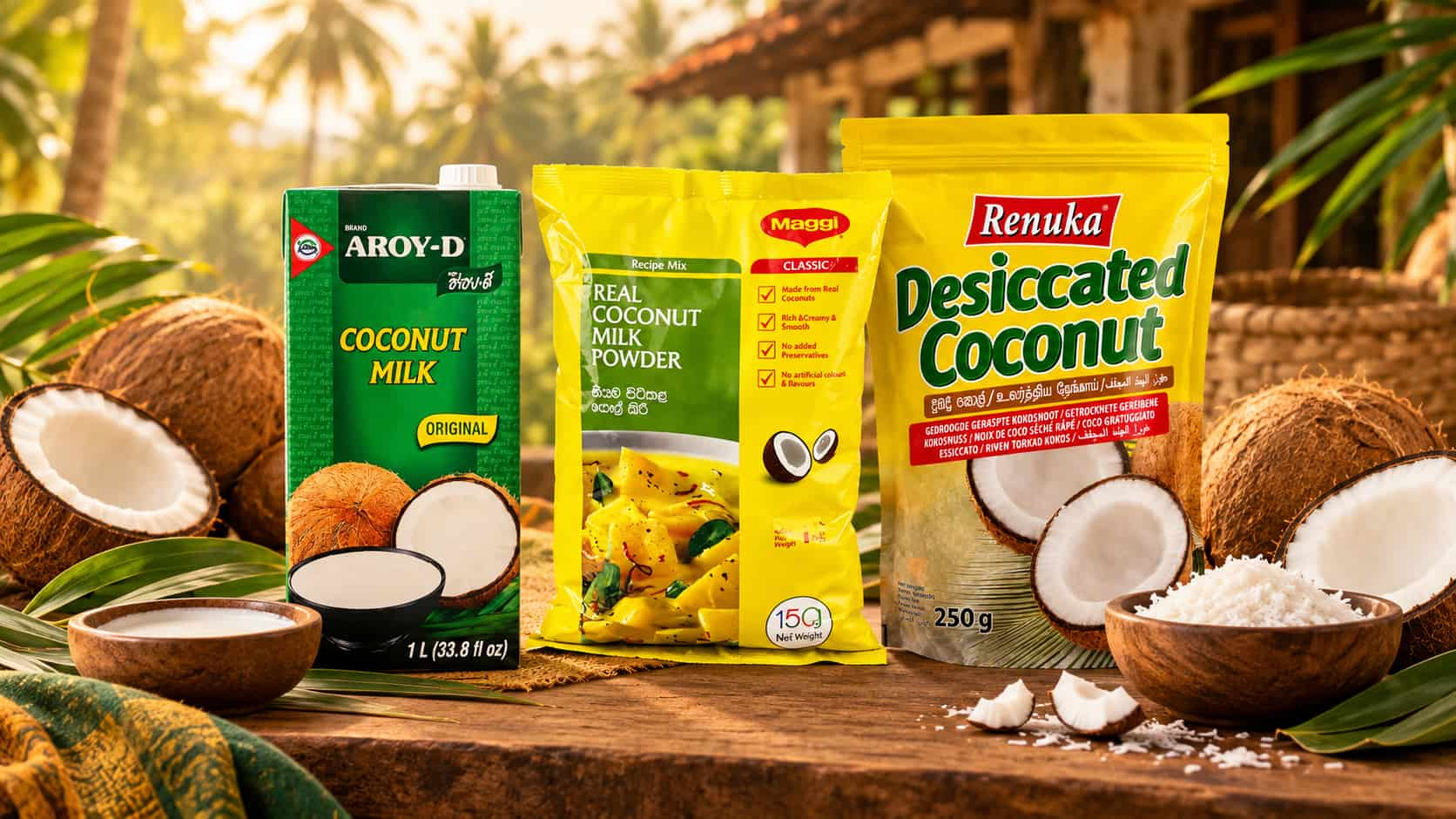
Canned, Carton or Coconut Milk Powder?
When shopping outside Sri Lanka, you may find coconut milk in several forms.
Canned Coconut Milk
Canned coconut milk is convenient and widely used.
It can be especially useful when you want richer coconut milk without preparing fresh coconut.
Carton Coconut Milk
Coconut milk can also be sold in cartons.
Always check the product because coconut drinks intended as beverages aren’t necessarily the same as coconut milk intended for cooking.
Coconut Milk Powder
Coconut milk powder is another convenient pantry option.
It can be mixed with water according to the product instructions, allowing you to prepare the amount you need.
This can be useful if you cook Sri Lankan food regularly but don’t always need a full can or carton.
How Should You Store Coconut Milk?
Always follow the instructions on the packaging.
Unopened packaged coconut milk can usually be stored according to the manufacturer’s guidance. Once opened, storage requirements change.
It generally needs refrigeration and should be used within the period specified on the package.
Don’t leave opened coconut milk sitting in the pantry.
If you regularly find yourself using only part of a package, plan another coconut-based dish so the rest doesn’t go to waste.
Dhal today. Vegetable curry tomorrow. Problem solved.
Common Mistakes When Cooking With Coconut Milk
Coconut milk is easy to use, but a few simple mistakes can affect the result.
Assuming Every Coconut Product Is the Same
Coconut milk, coconut cream and coconut drinks can have very different concentrations and purposes.
Adding Too Much
More coconut milk isn’t automatically better. You still want to taste the spices and other ingredients.
Cooking Rich Coconut Milk Too Aggressively
Some recipes benefit from gentle cooking after the richer coconut milk is added.
Ignoring the Recipe
Different Sri Lankan curries use coconut milk differently.
Forgetting About Balance
Coconut milk provides richness, but chilli, salt, acidity and spices still need to work together.
Fresh Coconut vs Packaged Coconut Milk
For generations, Sri Lankan families prepared coconut milk from freshly grated coconut. And many still do.
Freshly prepared coconut milk gives you control over the different extractions and can produce a wonderful flavour.
But when you’re living in Germany or elsewhere in Europe, grating a fresh coconut every time you make dhal isn’t always practical.
Packaged coconut milk makes traditional cooking much easier. And sometimes convenience is exactly what allows you to keep cooking familiar food regularly.
The goal isn’t to make everyday cooking unnecessarily difficult. It’s to create food you enjoy.
Building a Sri Lankan Pantry Around Coconut
If you’re starting a Sri Lankan pantry, coconut products deserve a permanent place.
A useful starting collection might include:
- Coconut Milk
- Coconut Milk Powder
- Coconut products for sambols and cooking
- Curry Powder
- Roasted Curry Powder
- Chilli Powder
- Turmeric
- Curry Leaves
- Goraka
- Rice
- Sri Lankan flour products
With these ingredients available, you can already prepare or begin exploring a large number of Sri Lankan meals.
That’s why our Beginner’s Guide to Sri Lankan Cooking Ingredients focuses on building a useful pantry rather than buying ingredients for only one recipe.
Coconut Connects So Many Sri Lankan Foods
Look at the dishes we’ve explored so far.
Pol Sambol uses coconut.
Pittu uses coconut.
Dhal Curry can use coconut milk.
Fish Curry may use coconut milk.
Kiri Hodi is built around coconut milk.
String hoppers are commonly eaten with coconut-based accompaniments.
And we haven’t even reached Sri Lankan sweets and desserts yet.
Once you understand coconut, you begin to understand a much bigger part of Sri Lankan cuisine.
Finding Coconut Products in Germany and Europe
Coconut milk itself isn’t particularly difficult to find in Europe. But if you’re building a complete Sri Lankan pantry, you may also need the spices, rice, flour and other ingredients that go with it.
That’s where specialist Sri Lankan grocery stores become useful.
At LankaMart, we bring together coconut products with Sri Lankan spices, rice, flour, curry ingredients, snacks, tea and other everyday favourites.
So instead of searching several different shops for one meal, you can find many familiar Sri Lankan ingredients together.
LankaMart delivers to customers in Germany, the Netherlands and other supported European countries.
One Ingredient, Countless Sri Lankan Meals
Coconut milk looks simple. But in Sri Lankan cooking, it can do an incredible amount.
It can turn lentils into creamy dhal, vegetables into comforting curries, fish into a rich coconut gravy, and string hoppers into a completely different meal when served with Kiri Hodi.
For someone learning Sri Lankan cooking, understanding coconut milk is a small skill that opens the door to dozens of dishes.
And for someone who grew up with Sri Lankan food?
Sometimes the smell of coconut milk simmering with curry leaves and spices is enough to make the kitchen feel a little more like home.
Explore Sri Lankan coconut products, spices and everyday cooking ingredients at LankaMart.
Frequently Asked Questions
What Is Coconut Milk Used for in Sri Lankan Cooking?
Coconut milk is used in many Sri Lankan dishes, including dhal, vegetable curries, some fish curries, coconut gravies such as Kiri Hodi and other traditional preparations.
What Is the Difference Between Thick and Thin Coconut Milk?
Thin coconut milk contains more water and is lighter, while thick coconut milk is richer and more concentrated. Traditional Sri Lankan recipes may use them at different stages of cooking.
Does Every Sri Lankan Curry Contain Coconut Milk?
No. Coconut milk is important in Sri Lankan cuisine, but many curries and other dishes are prepared without it.
Is Coconut Milk the Same as Coconut Cream?
No. Coconut cream is generally thicker and more concentrated than coconut milk, so they aren’t automatically interchangeable in every recipe.
Can I Use Packaged Coconut Milk for Sri Lankan Curry?
Yes. Packaged coconut milk is a convenient option, particularly when fresh coconut isn’t easily available. Check the product concentration and follow your recipe accordingly.
What Sri Lankan Foods Are Served With Coconut Milk?
Pittu can be eaten with coconut milk, while string hoppers are commonly served with coconut-based gravies such as Kiri Hodi. Coconut milk is also used directly in many curries.
Where Can I Buy Sri Lankan Coconut Products in Europe?
Specialist Sri Lankan grocery stores such as LankaMart offer coconut products alongside spices, rice, flour and other Sri Lankan cooking ingredients, with delivery to Germany, the Netherlands and other supported European countries.