How to Make Authentic Sri Lankan Dhal Curry at Home
Quick Answer
Sri Lankan dhal curry, often called parippu curry, is a comforting lentil curry commonly made with red lentils, coconut milk, turmeric, curry leaves and aromatic ingredients. It is a familiar part of everyday Sri Lankan cooking and can be served with rice and curry, bread, roti, string hoppers, pittu and many other dishes.
Introduction
Some Sri Lankan dishes are saved for special occasions.
Dhal curry isn’t one of them.
It’s the kind of food many of us grow up eating regularly. You might have it with rice for lunch, with bread for breakfast, or alongside several other curries when the whole family sits down for dinner.
It’s simple, comforting and doesn’t need a long list of complicated ingredients.
For Sri Lankans living abroad, dhal curry is also one of those dishes that can instantly feel familiar. The smell of coconut milk, curry leaves and spices coming together in the kitchen can bring back memories of home.
And if you’re discovering Sri Lankan cooking for the first time, dhal curry is one of the easiest dishes to begin with.
Here’s what you need to know.
What Is Sri Lankan Dhal Curry?
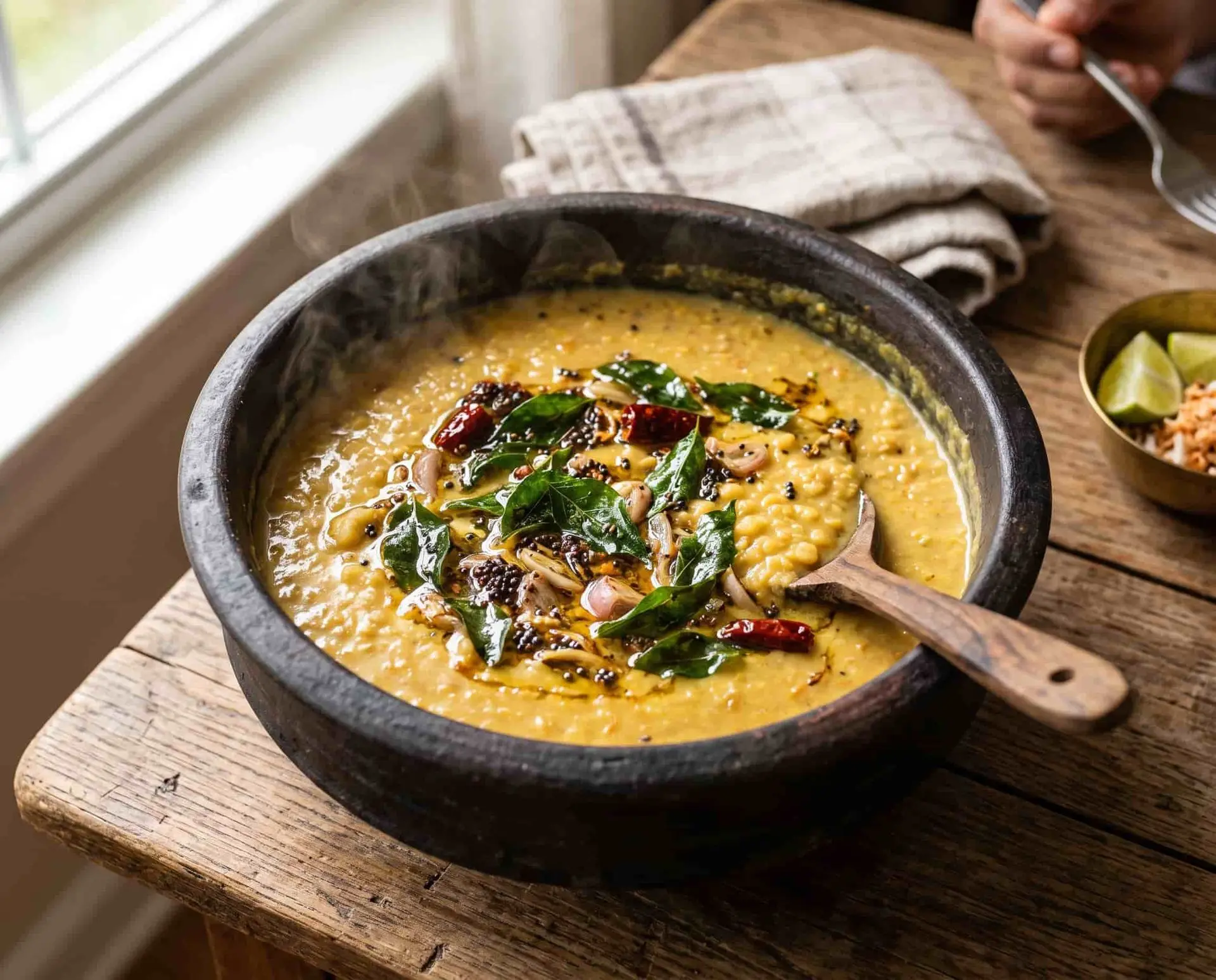
Sri Lankan dhal curry is a lentil-based curry commonly prepared using red lentils.
In Sri Lanka, you’ll also hear it called parippu curry.
There are many ways to prepare it, and families often have their own versions. Some prefer it thick and creamy. Others make it a little lighter. Some add more chilli, while others keep it mild.
What makes the Sri Lankan version distinctive is the combination of lentils with ingredients commonly found in Sri Lankan cooking, such as coconut milk, turmeric, curry leaves, chilli and aromatic spices.
The result is a creamy, gently spiced curry that works with almost anything.
Why Is Dhal Curry So Popular in Sri Lanka?
One reason is simply that it’s incredibly versatile.
You don’t need to wait for a particular occasion to make dhal curry.
It can be part of breakfast, lunch or dinner.
It also works beautifully alongside stronger curries because its creamy texture can help balance a spicy meal.
A typical Sri Lankan lunch might include rice, dhal curry, a vegetable curry, a meat or fish curry and something fresh or spicy on the side.
But dhal doesn’t need a large meal around it.
A simple plate of rice and dhal can be comforting enough on its own.
Ingredients You Need for Sri Lankan Dhal Curry
You don’t need a huge shopping list.
The exact ingredients can vary depending on the family or recipe, but these are some of the basics commonly used.
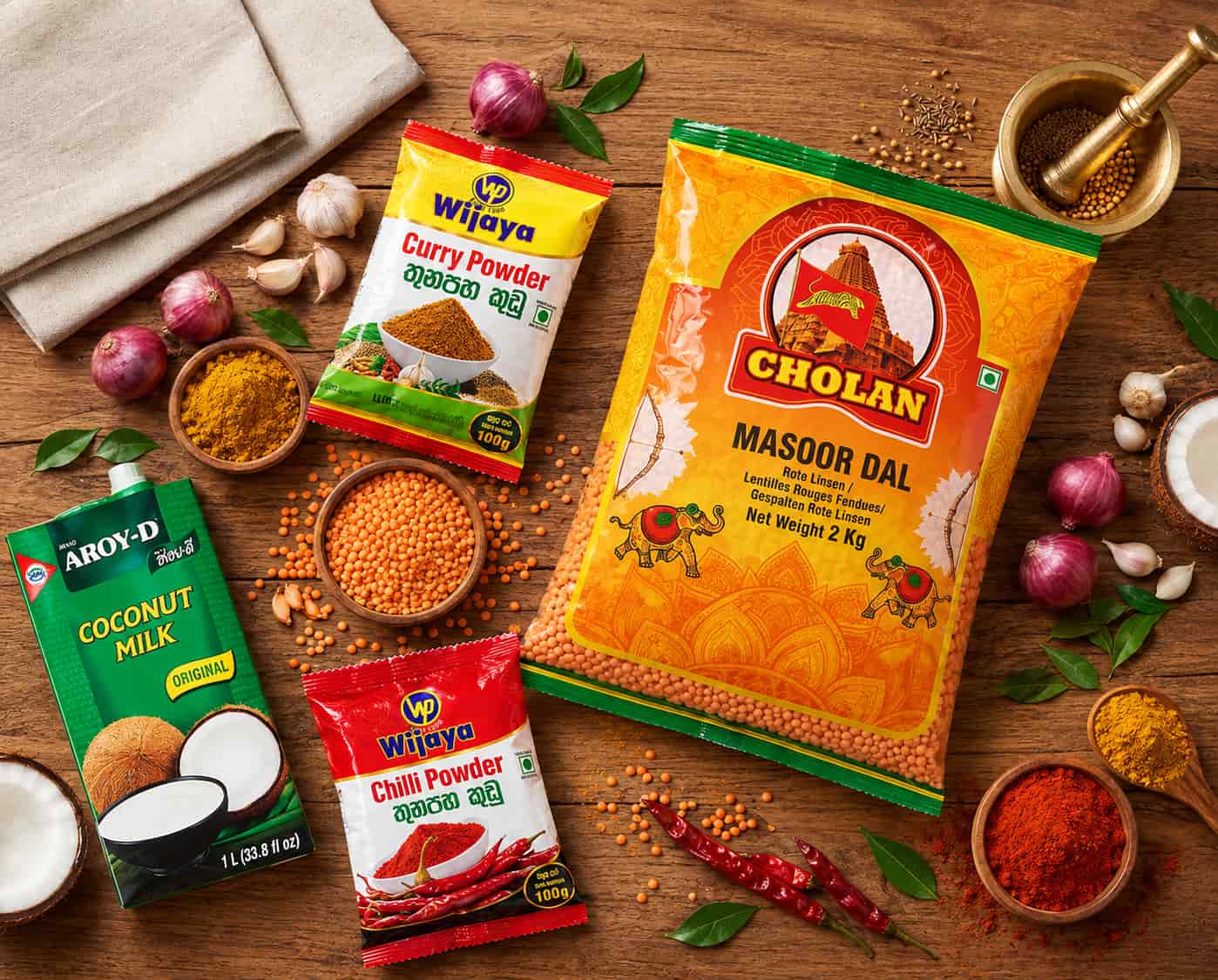
Red Lentils
Red lentils are the heart of the dish.
They cook relatively quickly and soften as they cook, creating the creamy texture associated with dhal curry.
Make sure to rinse the lentils well before cooking.
Coconut Milk
Coconut milk gives Sri Lankan dhal its rich, creamy character.
It also helps balance the spices and creates a smooth texture.
Coconut is used throughout Sri Lankan cuisine, and dhal curry is a perfect example of how such a simple ingredient can transform a dish.
Turmeric
You only need a small amount of turmeric.
It gives the dhal its familiar golden-yellow colour while adding a subtle earthy flavour.
Turmeric appears in many Sri Lankan curries, so it’s a useful spice to keep in your pantry.
Curry Leaves
Curry leaves add a distinctive aroma that immediately feels familiar in Sri Lankan cooking.
They’re often used alongside onion, chilli and other ingredients when preparing the curry or tempering.
Onion
Sliced onion adds sweetness and flavour as it cooks.
It’s one of the simplest ingredients in the recipe, but it plays an important role in building the base of the curry.
Green Chilli
Green chilli adds freshness and heat.
You can adjust the amount depending on how spicy you want your dhal to be.
If you’re preparing it for children or people who aren’t used to spicy food, simply use less.
Garlic
Garlic adds another layer of flavour and works naturally with the lentils, coconut milk and spices.
Chilli Powder
A little chilli powder can add both colour and heat.
Again, this is something you can adjust according to your taste.
How to Make Sri Lankan Dhal Curry
There isn’t only one correct way to cook dhal.
Every Sri Lankan family seems to have its own method, and that’s part of what makes home cooking special.
But a simple method looks something like this.
Step 1 — Wash the Lentils
Start by rinsing the red lentils thoroughly with water.
Continue rinsing until the water becomes clearer.
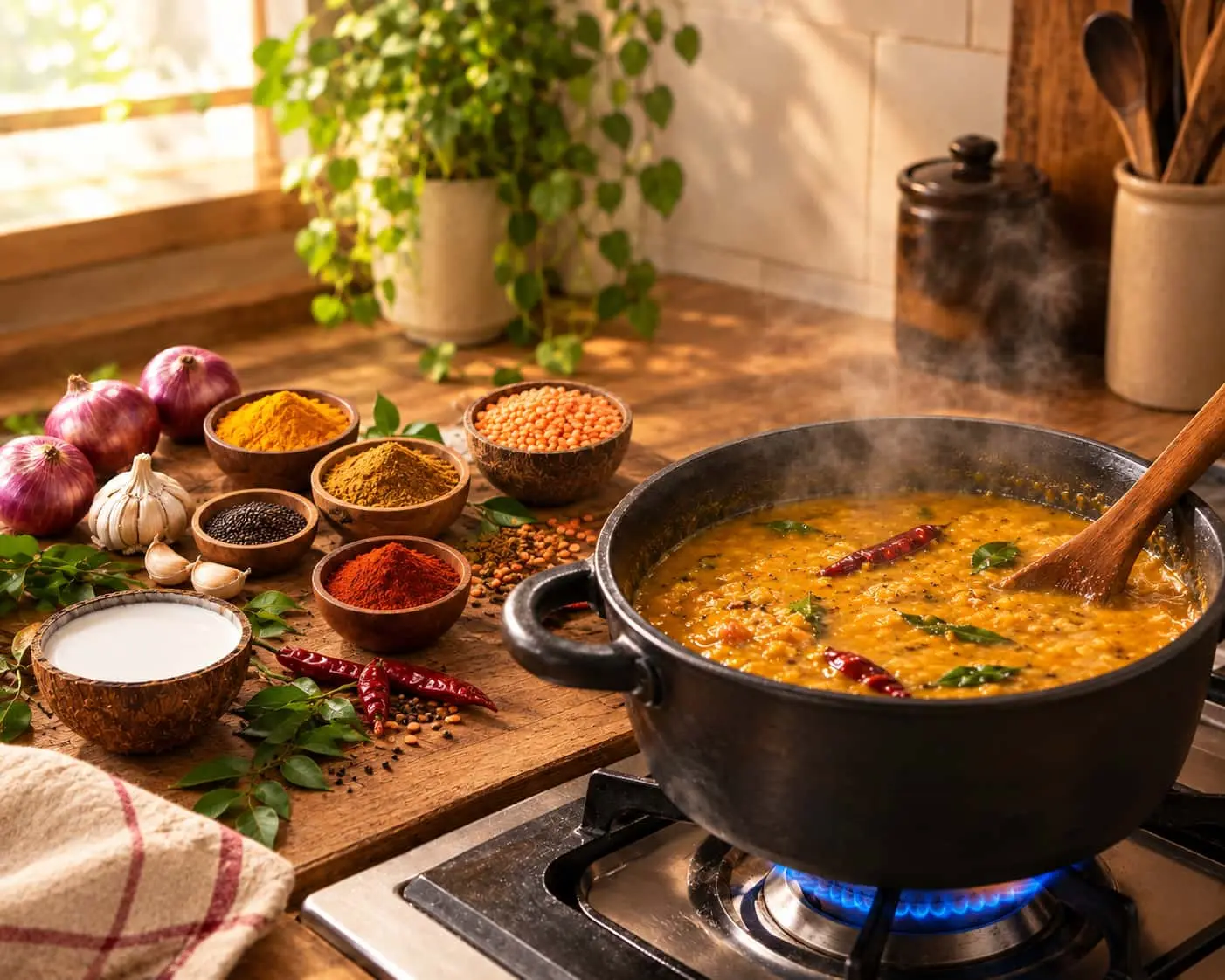
Step 2 — Add the Basic Ingredients
Place the lentils in a pot and add ingredients such as onion, turmeric, green chilli, garlic and curry leaves.
Add enough water for the lentils to cook.
Step 3 — Cook Until Soft
Allow everything to cook gently until the lentils become soft.
Red lentils cook relatively quickly, so keep an eye on the pot and add a little more water if necessary.
As they cook, the lentils will begin to break down and become creamy.
Step 4 — Add Coconut Milk
Once the lentils are cooked, add coconut milk.
Stir gently and allow the curry to heat through.
Avoid cooking it too aggressively after adding the coconut milk. A gentle simmer is usually enough to bring the flavours together.
Step 5 — Season to Taste
Add salt and adjust the chilli or other seasoning according to your preference.
This is where you make the curry your own.
Some people prefer dhal very mild and creamy.
Others want a little more heat.
Both can be delicious.
Should You Temper Sri Lankan Dhal Curry?
This is one of the little steps that can take a simple dhal curry to another level.
A tempering is usually prepared separately using a small amount of oil and aromatic ingredients.
You might use:
- Onion
- Curry leaves
- Dried chilli
- Mustard seeds
- Garlic
The ingredients are gently fried until aromatic and then added to the cooked dhal.
As soon as the hot tempering meets the curry, you’ll notice the aroma.
It’s a small extra step, but it can make a big difference.
Not every household prepares dhal in exactly the same way, so don’t worry if the version you grew up with is slightly different.
That’s completely normal in Sri Lankan cooking.
What Should You Eat With Dhal Curry?
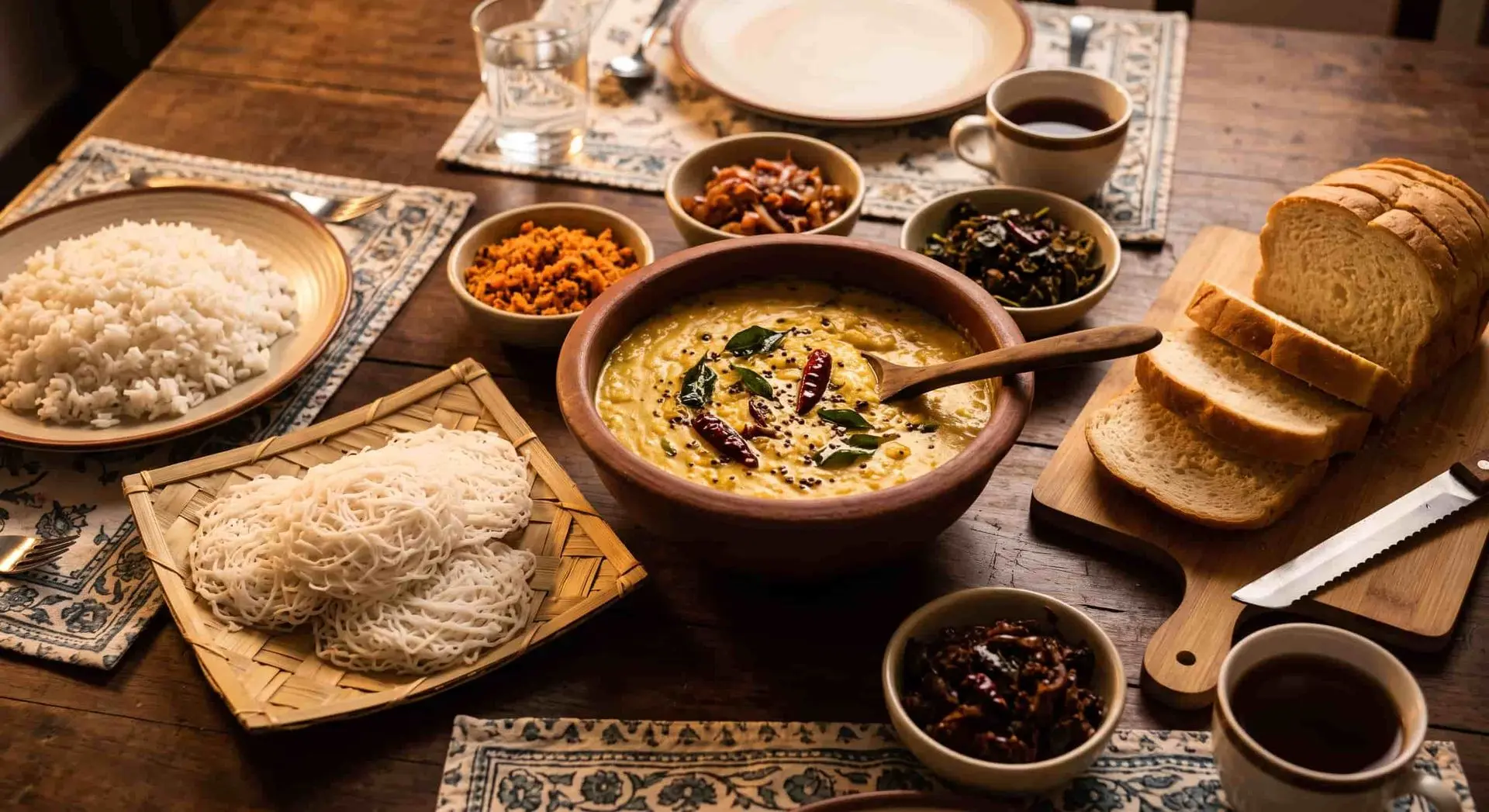
One of the best things about dhal is how many different foods you can serve it with.
Rice and Curry
This is probably the most familiar combination.
Serve dhal with steamed rice, a vegetable curry and your choice of chicken, fish or another curry.
If you’ve already read our guide on How to Make Authentic Sri Lankan Chicken Curry at Home, the two dishes work beautifully together.
String Hoppers
Dhal curry works particularly well with string hoppers.
The soft string hoppers absorb the curry, making it a simple and satisfying breakfast or dinner.
Pittu
Pittu and dhal are another comforting combination.
Add coconut sambol or another curry alongside it and you have a complete meal.
Roti
Sri Lankan roti with warm dhal curry makes an easy meal at almost any time of day.
Bread
Sometimes the simplest option is one of the best.
Fresh bread with dhal curry is a familiar meal in many Sri Lankan homes.
Is Sri Lankan Dhal Curry Very Spicy?
It doesn’t have to be.
Sri Lankan cuisine is known for bold flavours and plenty of chilli, but dhal curry can be quite mild.
That’s one reason it’s such a good introduction to Sri Lankan food.
You control the heat.
If you prefer mild food, reduce the chilli powder and green chilli.
If you enjoy something hotter, you can increase them.
The coconut milk also helps create a creamy flavour that balances the spices.
Small Tips for Better Dhal Curry
Dhal is simple, but a few small things can make it even better.
Wash your lentils properly.
Give them a good rinse before cooking.
Don’t rush the cooking.
Let the lentils soften naturally.
Adjust the coconut milk.
If you prefer a richer curry, you can make it creamier. If you prefer something lighter, adjust the amount accordingly.
Taste before serving.
The right amount of salt and chilli can completely change the final dish.
Try tempering it.
If you’ve never added a tempering before, it’s worth trying.
And most importantly, don’t worry about making it exactly like someone else’s dhal.
Sri Lankan home cooking is full of personal variations.
Find the version your family enjoys.
Building a Sri Lankan Meal Around Dhal
If you’re new to Sri Lankan cooking, dhal is a great starting point for building a complete meal.
Start with:
Steamed rice + dhal curry
Then add one vegetable curry.
Next time, add chicken curry.
Later, try making Pol Sambol.
Before long, what started as one simple dhal curry becomes a proper Sri Lankan rice and curry meal.
That’s one of the nicest things about learning Sri Lankan cooking.
You don’t have to learn everything at once.
You can build your confidence one dish at a time.
Finding Sri Lankan Cooking Ingredients in Germany
Red lentils themselves are relatively easy to find in Germany.
But when you start cooking more Sri Lankan food, you’ll probably want ingredients such as curry leaves, Sri Lankan spices, coconut products, roasted curry powder, chilli powder and other familiar pantry essentials.
Finding all of those in one ordinary supermarket isn’t always easy.
At LankaMart, we want to make that part simpler.
We bring together Sri Lankan groceries, spices, rice, flour, coconut products, tea, snacks and other everyday ingredients so you can find the foods you need in one place.
Whether you’re recreating the meals you grew up eating or discovering Sri Lankan cooking for the first time, having the right ingredients makes everything easier.
A Simple Curry That Feels Like Home
Dhal curry isn’t the most complicated Sri Lankan dish.
And maybe that’s exactly why people love it so much.
It’s warm.
It’s familiar.
It works with almost anything.
And it can turn a simple plate of rice into something comforting.
For many Sri Lankans living overseas, these everyday dishes are often the ones we miss most.
You don’t need a special occasion.
You don’t need complicated cooking techniques.
A pot of dhal, some rice and a few familiar flavours can sometimes be enough to make dinner feel a little more like home.
Frequently Asked Questions
What is Sri Lankan dhal curry made from?
Sri Lankan dhal curry is commonly made with red lentils, coconut milk, turmeric, onion, curry leaves, chilli and other aromatic ingredients. Recipes vary between households.
Is Sri Lankan dhal the same as Indian dal?
Both are lentil-based dishes, but recipes, spice combinations, preparation methods and regional traditions vary. Sri Lankan dhal curry commonly reflects ingredients used throughout Sri Lankan cooking, including coconut milk and curry leaves.
What do Sri Lankans eat with dhal curry?
Dhal curry is commonly eaten with rice, bread, roti, string hoppers, pittu and other Sri Lankan dishes. It is also frequently served as part of a larger rice and curry meal.
Is Sri Lankan dhal curry spicy?
It can be mild or spicy depending on how much chilli is used. The heat can easily be adjusted to suit your preference.
Where can I buy Sri Lankan ingredients in Germany?
Specialist Sri Lankan grocery stores such as LankaMart offer Sri Lankan spices, coconut products, rice, flour and other cooking ingredients online for customers in Germany and other supported European destinations.
Shop Now