How to Make Authentic Sri Lankan Fish Curry at Home
Quick Answer:
Sri Lankan fish curry is a flavourful curry made with fish, chilli, turmeric, curry leaves and traditional Sri Lankan spices. Depending on the style, ingredients such as Goraka and coconut milk may also be used. It can range from rich and creamy to dark, sour and intensely spiced, and is commonly served with rice, dhal curry and other Sri Lankan dishes.
Introduction
If you grew up eating Sri Lankan food, there’s a good chance fish curry appeared on the table regularly.
Sri Lanka is an island, so it’s no surprise that fish has an important place in our food culture.
But there isn’t just one Sri Lankan fish curry.
Some are spicy and sour. Some are creamy with coconut milk. Some are light enough for an everyday meal, while others are cooked slowly until the gravy becomes dark, rich and full of flavour.
And just like dhal curry or Pol Sambol, every family seems to have its own way of making it.
If you’re learning Sri Lankan cooking, fish curry is a wonderful dish to add to your list.
Let’s look at the ingredients, the basic cooking method and what makes Sri Lankan fish curry different.
What Is Sri Lankan Fish Curry?
Sri Lankan fish curry is a broad name for several traditional curries prepared using fish and a combination of spices and aromatics.
Typical ingredients can include:
- Chilli
- Turmeric
- Curry leaves
- Onion
- Garlic
- Ginger
- Fenugreek
- Goraka
- Coconut milk
Not every recipe uses all of these.
That’s important because Sri Lankan fish curry changes depending on the region, household, type of fish and style of curry being prepared.
A coconut milk fish curry, for example, can be quite different from a darker, sour Goraka-based curry.
But both can be unmistakably Sri Lankan.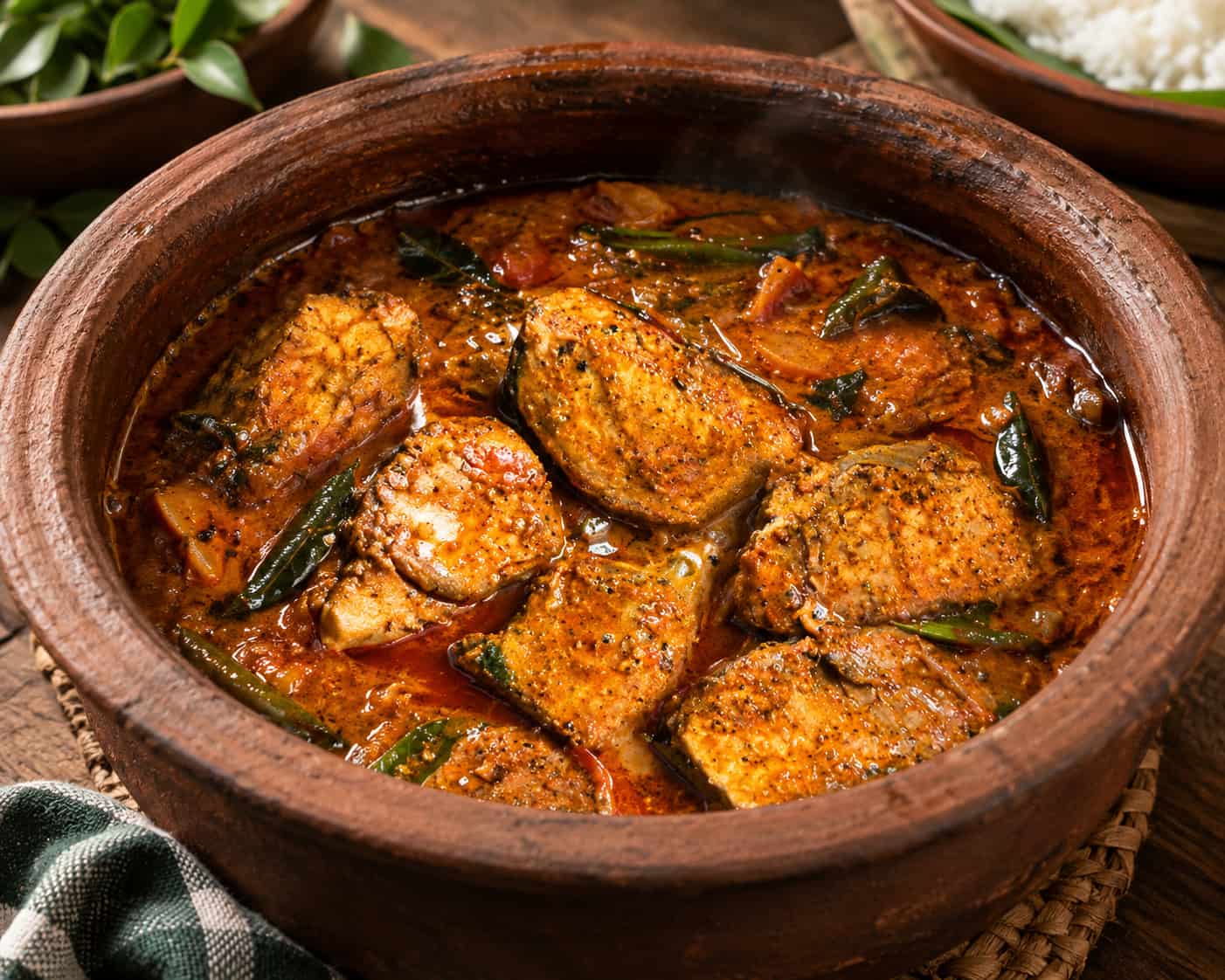
What Makes Sri Lankan Fish Curry Different?
One of the most interesting things about Sri Lankan cooking is the balance between different flavours.
- Heat from chilli.
- Earthiness from spices.
- Aroma from curry leaves.
- Richness from coconut.
- And, in certain fish curries, a distinctive sourness from Goraka.
It’s rarely about one spice doing all the work.
Instead, several ingredients come together to create layers of flavour.
That’s why having the right Sri Lankan pantry ingredients can make such a difference.
What Is Goraka?
If you’re beginning to explore Sri Lankan cooking, Goraka is an ingredient worth knowing.
Goraka is a souring ingredient traditionally used in Sri Lankan cuisine, particularly in certain fish dishes.
It provides a deep, distinctive sour flavour that is different from simply adding lemon or lime juice.
Goraka is especially associated with some of Sri Lanka’s darker and more intensely flavoured fish preparations.
If you’ve never cooked with it before, start carefully.
You don’t need a huge amount for it to influence the dish.
We’ve also created a separate guide explaining how Goraka is used in Sri Lankan cooking, which is useful if this ingredient is completely new to you.
Ingredients You Need for Sri Lankan Fish Curry
The ingredients will change depending on the style you’re making.
For a simple home-style fish curry, however, these are some of the ingredients you may need.
Fish
Choose a firm fish that can hold together reasonably well during cooking.
Different Sri Lankan households use different varieties depending on what’s fresh and available.
When living in Germany or elsewhere in Europe, you may not always find exactly the same fish varieties you would buy in Sri Lanka.
That’s okay.
The spices and cooking method can still help create a familiar Sri Lankan flavour.
Chilli Powder
Sri Lankan fish curry can have plenty of heat.
Chilli powder contributes both colour and flavour.
You can adjust the quantity depending on your tolerance for spicy food.
Turmeric
Turmeric adds colour and a subtle earthy note.
Only a small amount is normally required.
Goraka
For fish curry styles that require sourness, Goraka can be one of the defining ingredients.
It is particularly useful when you’re trying to recreate a more traditional Sri Lankan flavour.
Curry Leaves
Curry leaves provide one of those aromas that immediately feels familiar in Sri Lankan cooking.
They work particularly well with fish, coconut and spices.
Onion
Onion helps form the flavour base of the curry and adds natural sweetness as it cooks.
Garlic and Ginger
Garlic and ginger add depth and aroma.
They appear throughout Sri Lankan cooking and are useful ingredients to keep available if you regularly prepare curries.
Green Chilli
Green chilli provides a fresher kind of heat compared with chilli powder.
Adjust it according to your preference.
Coconut Milk
Not every Sri Lankan fish curry contains coconut milk.
But for recipes that do, coconut milk creates a smoother, richer gravy and helps balance the chilli.
If you’re making a creamy Sri Lankan fish curry, good coconut milk makes a noticeable difference.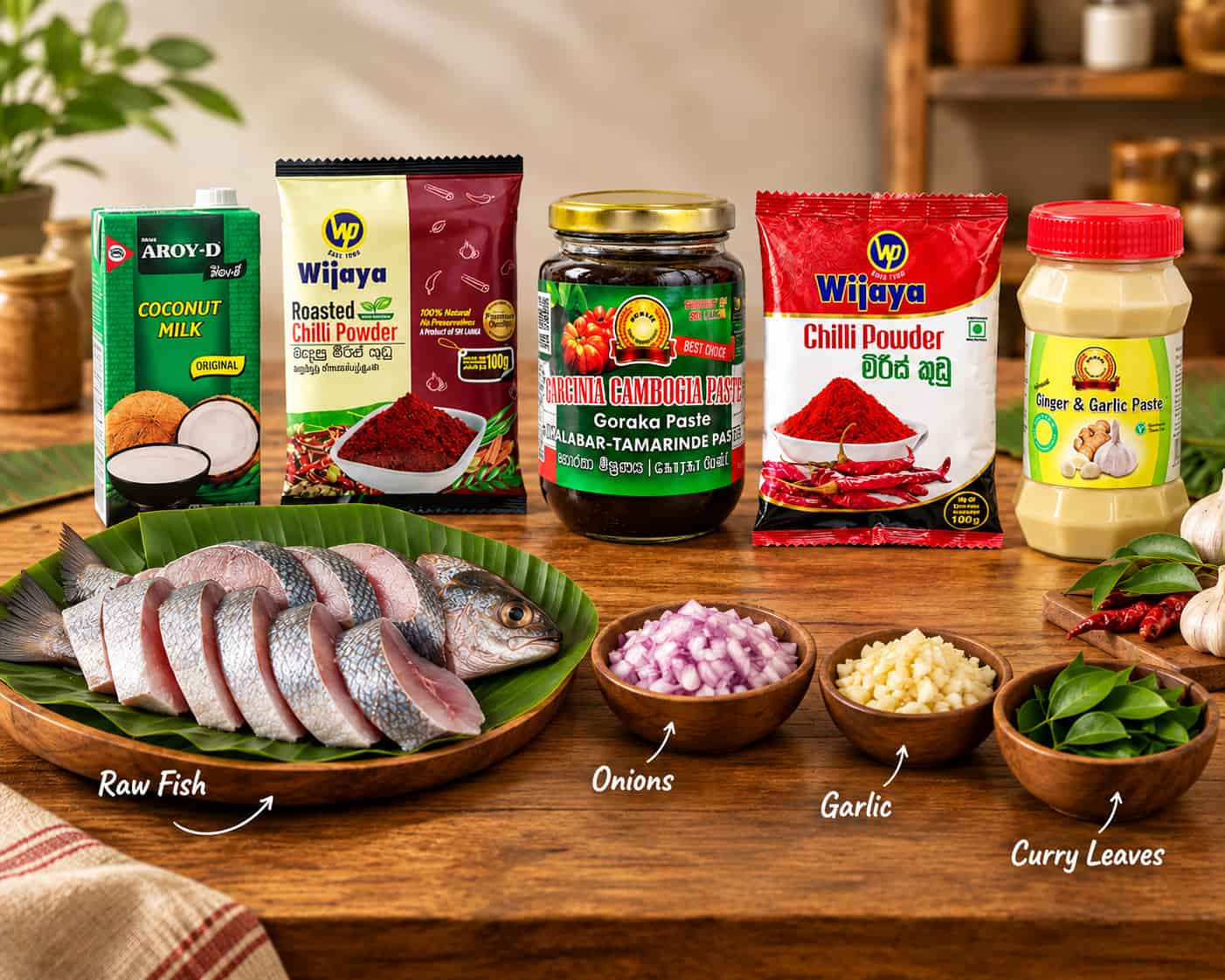
How to Make a Simple Sri Lankan Fish Curry
There are many traditional methods, but here’s a simple way to understand the process.
Step 1 — Prepare the Fish
Clean the fish and cut it into suitable pieces.
Handle it carefully so the pieces don’t break apart before cooking.
Step 2 — Prepare the Spices
Combine your chilli powder, turmeric and other spices according to your recipe.
If you’re using Goraka, prepare it as required before adding it to the curry.
Step 3 — Build the Curry Base
Add ingredients such as onion, garlic, ginger, green chilli and curry leaves to your cooking pot.
Combine them with the spices.
This is where the flavour begins to develop.
Step 4 — Add the Liquid
Depending on the type of fish curry you’re preparing, this may be water, coconut milk or a combination appropriate for the recipe.
Stir the curry base before adding the fish.
Step 5 — Add the Fish
Place the fish pieces gently into the curry.
Once the fish is added, avoid aggressively stirring the pot.
Fish can break apart quite easily.
Instead, gently move or swirl the pot when necessary.
Step 6 — Cook Gently
Allow the fish to cook until it is done and the gravy has developed its flavour.
The exact cooking time will depend on the fish and the size of the pieces.
Fish generally doesn’t need the long cooking time required by some meat curries.
Step 7 — Taste and Adjust
Before serving, taste the gravy.
Check the salt.
Check the chilli.
Check the sourness.
Sri Lankan curry is all about balance.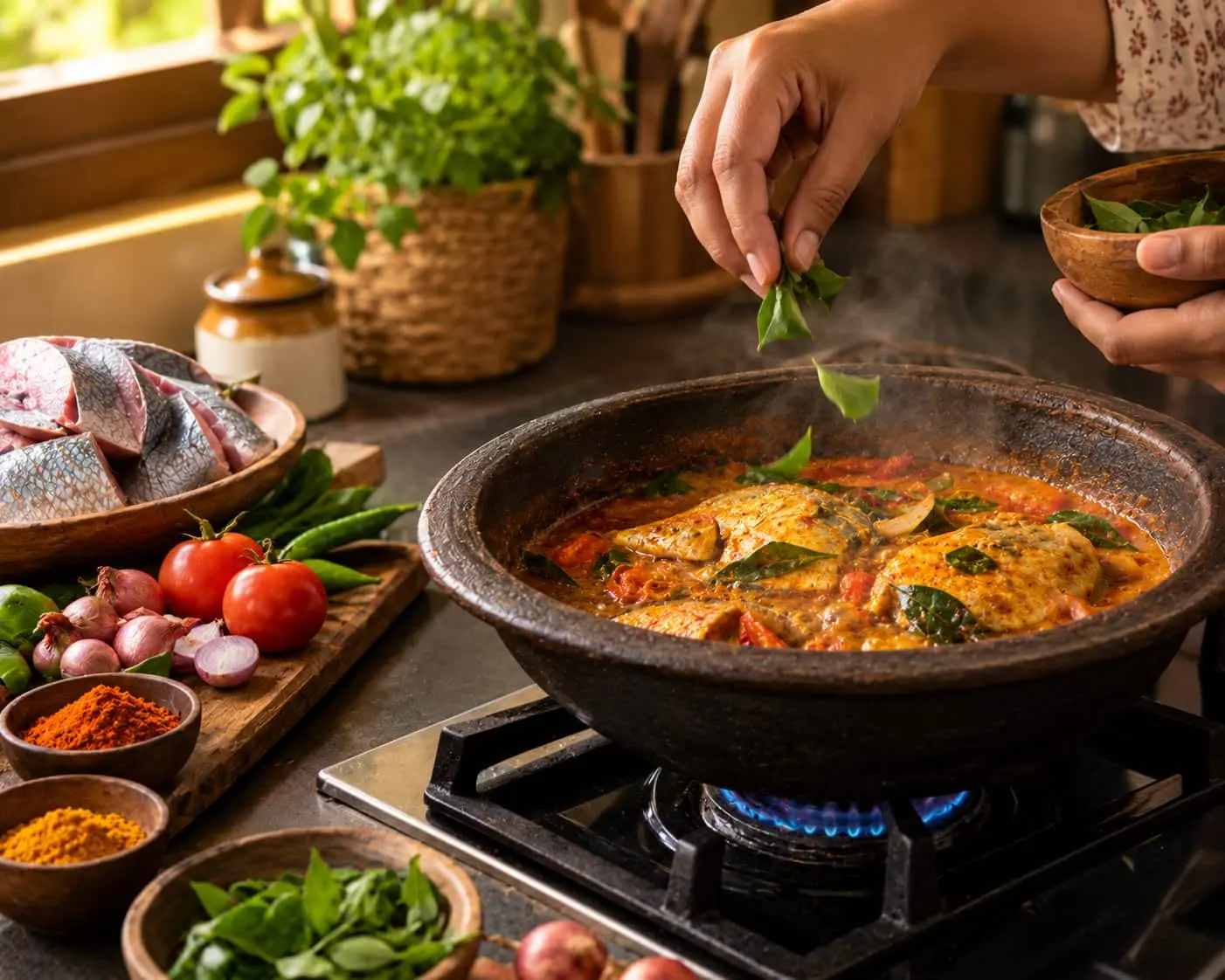
Coconut Milk Fish Curry vs Goraka Fish Curry
These are two styles worth understanding when you’re exploring Sri Lankan food.
Coconut Milk Fish Curry
Adding coconut milk creates a richer and creamier curry.
The coconut helps soften the chilli and gives the gravy a smoother character.
This can be a good introduction to Sri Lankan fish curry if you prefer something less intense.
Goraka-Based Fish Curry
Goraka creates a completely different flavour profile.
The curry can be darker, spicier and noticeably sour.
One well-known Sri Lankan preparation that uses Goraka is Ambul Thiyal, or sour fish curry.
Although related to the broader world of Sri Lankan fish dishes, Ambul Thiyal has its own preparation and deserves a separate guide rather than being treated as simply another coconut fish curry.
What Is Sri Lankan Ambul Thiyal?
Ambul Thiyal is one of Sri Lanka’s best-known fish preparations.
It is particularly associated with the southern part of Sri Lanka.
The dish is known for its dark appearance and distinctive sour flavour, with Goraka playing an important role.
Unlike a fish curry with plenty of liquid gravy, Ambul Thiyal is generally cooked down much further.
The spices coat the fish and create an intense flavour.
If you’re new to Sri Lankan cooking, it is useful to understand that Sri Lankan fish curry and Ambul Thiyal aren’t necessarily the same dish.
We’ll explore traditional Ambul Thiyal in more detail in a separate article.
What Should You Eat With Sri Lankan Fish Curry?
Fish curry is incredibly easy to build a meal around.
Rice
Steamed rice is the obvious starting point.
The rice absorbs the curry gravy and balances the stronger flavours of the fish.
Dhal Curry
Fish curry and dhal work beautifully together.
The dhal is creamy and mild, while the fish curry can bring chilli, sourness and stronger spices.
If you haven’t made it yet, read our guide to How to Make Authentic Sri Lankan Dhal Curry at Home.
Pol Sambol
Want more heat and freshness?
Add Pol Sambol.
Coconut, chilli, onion and lime provide a fresh contrast to the cooked curry.
You can follow our Sri Lankan Pol Sambol guide to make it at home.
Vegetable Curry
A simple vegetable curry completes the plate nicely.
Sri Lankan meals are often about combining several different flavours and textures rather than relying on one dish alone.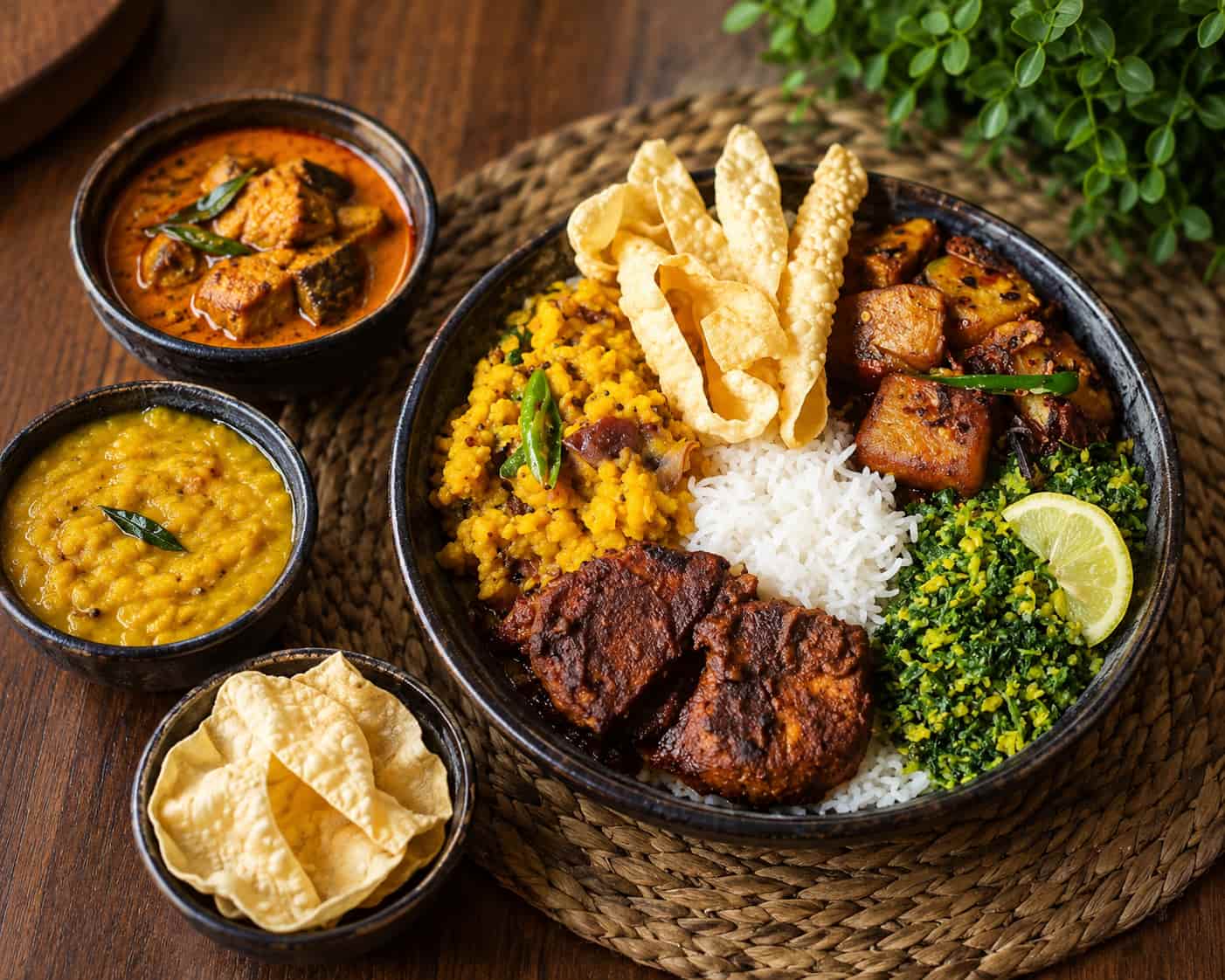
How Spicy Is Sri Lankan Fish Curry?
It depends entirely on the recipe.
Some Sri Lankan fish curries are definitely hot.
Others are much milder.
If you’re new to Sri Lankan cooking, don’t feel that you have to add a huge amount of chilli just to make the curry “authentic.”
Start with a manageable amount.
Taste.
Then adjust.
Authentic home cooking isn’t about making food painfully spicy.
It’s about creating the right balance of flavours.
Common Mistakes When Making Fish Curry
Fish curry isn’t particularly difficult, but there are a few things worth watching.
Stirring Too Much
Once the fish starts cooking, aggressive stirring can break it into pieces.
Overcooking the Fish
Fish usually cooks relatively quickly. Cooking it for too long can affect its texture.
Adding Too Much Goraka
Goraka has a distinctive sour flavour. Start carefully until you understand how much your recipe needs.
Using Too Much Chilli Immediately
You can always increase the heat, but fixing an excessively spicy curry is much harder.
Forgetting About Balance
A good curry shouldn’t taste only of chilli.
Salt, sourness, spice, coconut and aromatics all need to work together.
Building Your Sri Lankan Cooking Skills
If you’ve been following our beginner recipes, you may already notice how the dishes start connecting.
First, you learn dhal curry.
Then Pol Sambol.
Now fish curry.
The same ingredients begin appearing again and again.
- Turmeric
- Chilli
- Curry leaves
- Coconut
- Onion
- Garlic
Goraka introduces another important Sri Lankan flavour.
That’s why building a good Sri Lankan pantry is so useful.
Once you have the basics, you don’t need to buy an entirely new collection of ingredients every time you want to cook something different.
Finding Sri Lankan Ingredients in Germany and Europe
If you’re living outside Sri Lanka, finding the fish itself may not be the hardest part.
Finding the right spices and traditional ingredients can sometimes be more difficult.
Ingredients such as Goraka, Sri Lankan chilli powder, curry leaves, coconut products, roasted curry powder and other familiar pantry essentials aren’t always available at an ordinary supermarket.
That’s where specialist stores can help.
At LankaMart, we’re building a collection of authentic Sri Lankan groceries for people who want to enjoy familiar food at home.
From spices and coconut products to rice, flour, tea, snacks and everyday pantry essentials, our goal is to make Sri Lankan products easier to find across Europe.
LankaMart serves customers in Germany, the Netherlands and other supported European countries.
A Curry That Tells a Sri Lankan Story
Fish curry is more than another recipe.
It reflects something important about Sri Lankan food.
An island surrounded by the sea.
Generations of home cooking.
Coconut growing across the country.
Spices used every day.
Regional recipes passed from one family to another.
And ingredients such as Goraka that give Sri Lankan food its own identity.
Your fish curry doesn’t have to look exactly like someone else’s.
Your mother might make it differently.
Your grandmother probably had her own method too.
That’s normal.
Start with the basics, understand the ingredients and slowly find the version that tastes right in your home.
Explore authentic Sri Lankan spices, coconut products and everyday cooking ingredients at LankaMart.
Frequently Asked Questions
What Is Sri Lankan Fish Curry?
Sri Lankan fish curry is a fish-based curry prepared with spices and aromatics such as chilli, turmeric, curry leaves, onion and garlic. Depending on the recipe, Goraka, coconut milk and other ingredients may also be used.
What Makes Sri Lankan Fish Curry Sour?
Some Sri Lankan fish curries use Goraka, a traditional souring ingredient that gives the dish a distinctive sour flavour.
Does Sri Lankan Fish Curry Contain Coconut Milk?
Some versions do, while others don’t. Coconut milk fish curries tend to be richer and creamier, while other Sri Lankan fish preparations may use Goraka and spices without coconut milk.
What Is Goraka Used For?
Goraka is used as a souring ingredient in Sri Lankan cuisine and is particularly associated with fish dishes such as Ambul Thiyal.
What Do You Eat With Sri Lankan Fish Curry?
Fish curry is commonly served with rice and can be accompanied by dhal curry, vegetable curries, Pol Sambol and other Sri Lankan side dishes.
Is Sri Lankan Fish Curry Spicy?
It can be spicy, but the level of heat varies by recipe and household. The amount of chilli can be adjusted according to personal preference.
Where Can I Buy Sri Lankan Cooking Ingredients in Europe?
Specialist Sri Lankan grocery stores such as LankaMart offer spices, Goraka, coconut products, rice, flour and other Sri Lankan pantry essentials online, with delivery to Germany, the Netherlands and other supported European countries.