A Guide to Sri Lankan Rice Varieties and How to Use Them
Quick Answer
Rice is at the heart of Sri Lankan food. Popular varieties and styles include Samba, Keeri Samba, Nadu and red rice, with different types chosen for everyday rice and curry, special meals and traditional dishes. Their grain size, texture, aroma and flavour can vary, so choosing the right rice can make a noticeable difference to a Sri Lankan meal.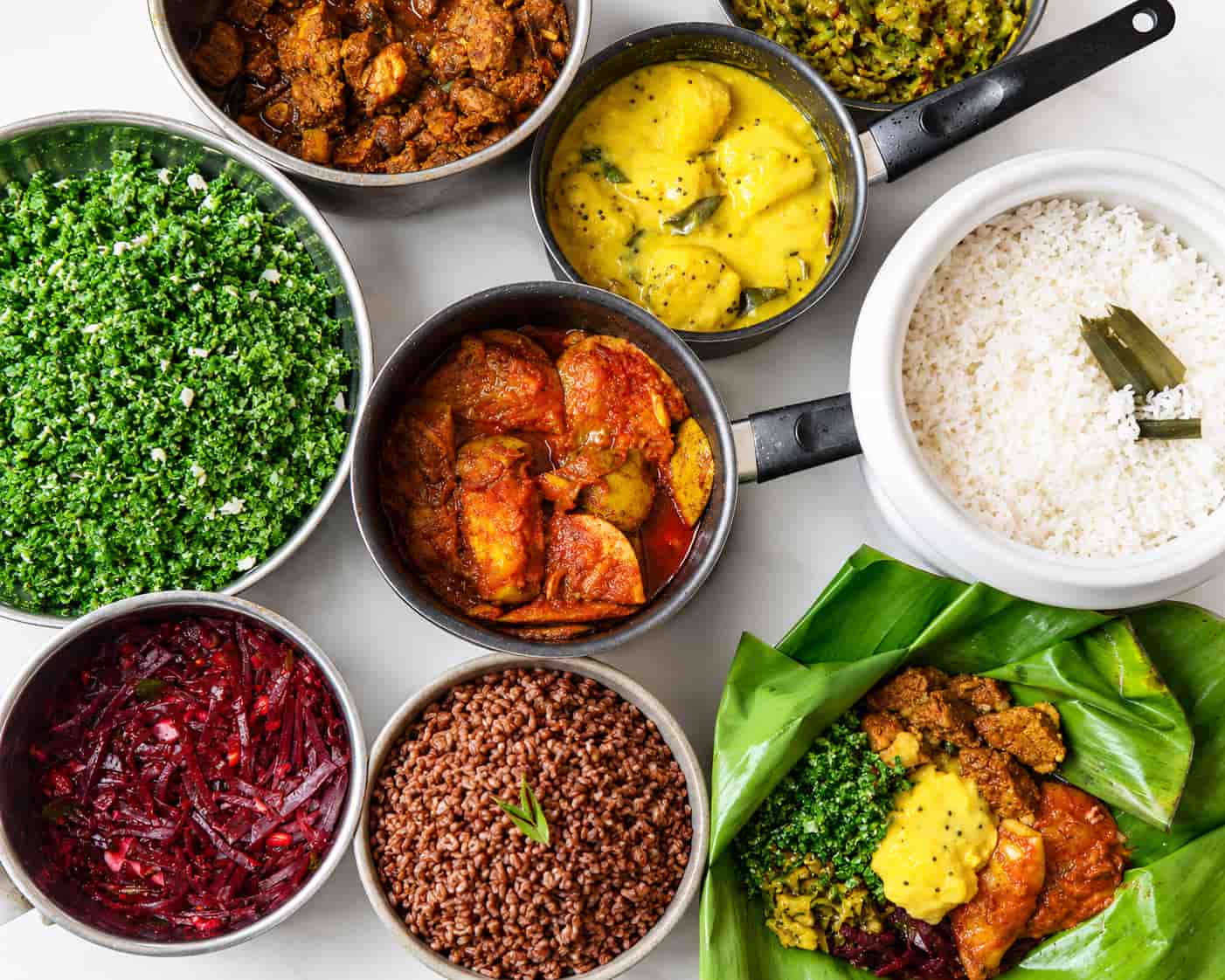
Introduction
If there is one ingredient that brings almost every Sri Lankan kitchen together, it is rice.
For many of us, rice isn’t simply something we eat occasionally.
It’s part of everyday life.
- Rice and dhal.
- Rice and chicken curry.
- Rice and fish curry.
Rice with vegetables, Pol Sambol and whatever else happens to be on the table that day.
But if you’ve ever walked into a Sri Lankan grocery store, you may have noticed something.
There isn’t just one kind of rice.
- Samba.
- Keeri Samba.
- Nadu.
- Red rice.
And then different brands, grain sizes and varieties within those groups.
If you grew up eating Sri Lankan food, you may already know which one your family prefers without thinking much about it.
But if you’re new to Sri Lankan cooking, all those choices can be confusing.
So let’s make it simple.
Why Is Rice So Important in Sri Lankan Food?
Sri Lanka has a long relationship with rice cultivation and rice-based food.
Even today, one of the most familiar expressions of Sri Lankan home cooking is simply rice and curry.
And “curry” usually doesn’t mean one curry.
A plate might include rice with dhal, a vegetable curry, chicken or fish, a sambol and perhaps another side dish.
Rice sits at the centre and brings everything together.
Its relatively simple flavour provides a base for all the spices, coconut, chilli and other flavours surrounding it.
That’s why the rice you choose matters more than you might think.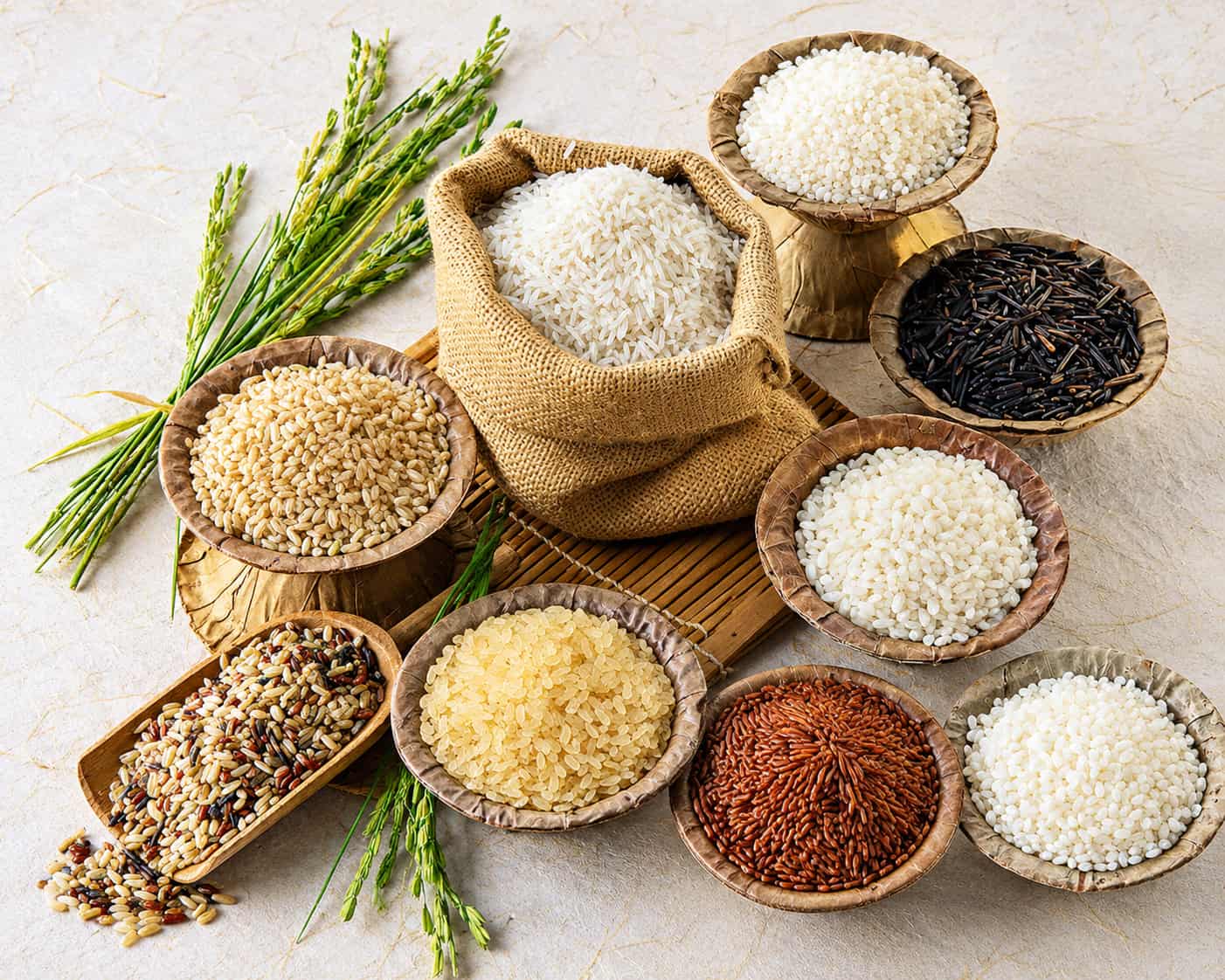
Are All Sri Lankan Rice Varieties the Same?
No.
Different rice varieties can vary in:
- Grain size
- Shape
- Texture
- Aroma
- Flavour
- Colour
- Cooking characteristics
Some people prefer softer rice.
Others prefer grains that remain more separate.
Some Sri Lankan meals work particularly well with a specific type of rice, while for everyday rice and curry, family preference often decides what goes into the pot.
There isn’t necessarily one “best” Sri Lankan rice.
It’s about understanding the differences and finding what works for the meal you’re preparing.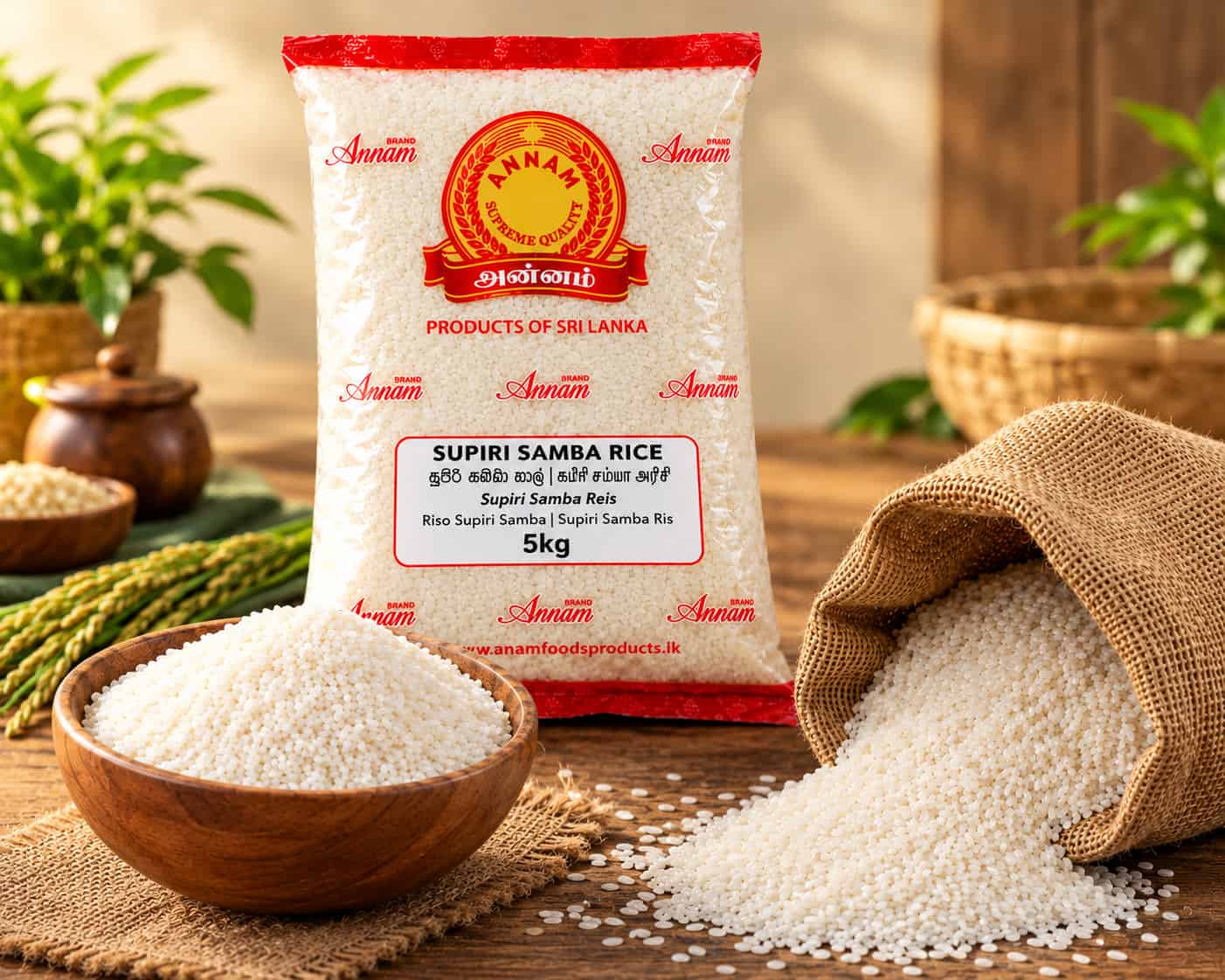
Samba Rice
Samba rice is a familiar name in Sri Lankan households.
It generally has a smaller, shorter grain than many long-grain rice varieties.
Once cooked, it has a characteristic texture that works particularly well with Sri Lankan curries.
For many people, a plate of Samba rice with several curries immediately feels like a proper home-style meal.
What Can You Eat With Samba Rice?
Samba works well with:
- Dhal curry
- Chicken curry
- Fish curry
- Vegetable curries
- Pol Sambol
In other words, it’s a very practical choice for a traditional Sri Lankan rice and curry meal.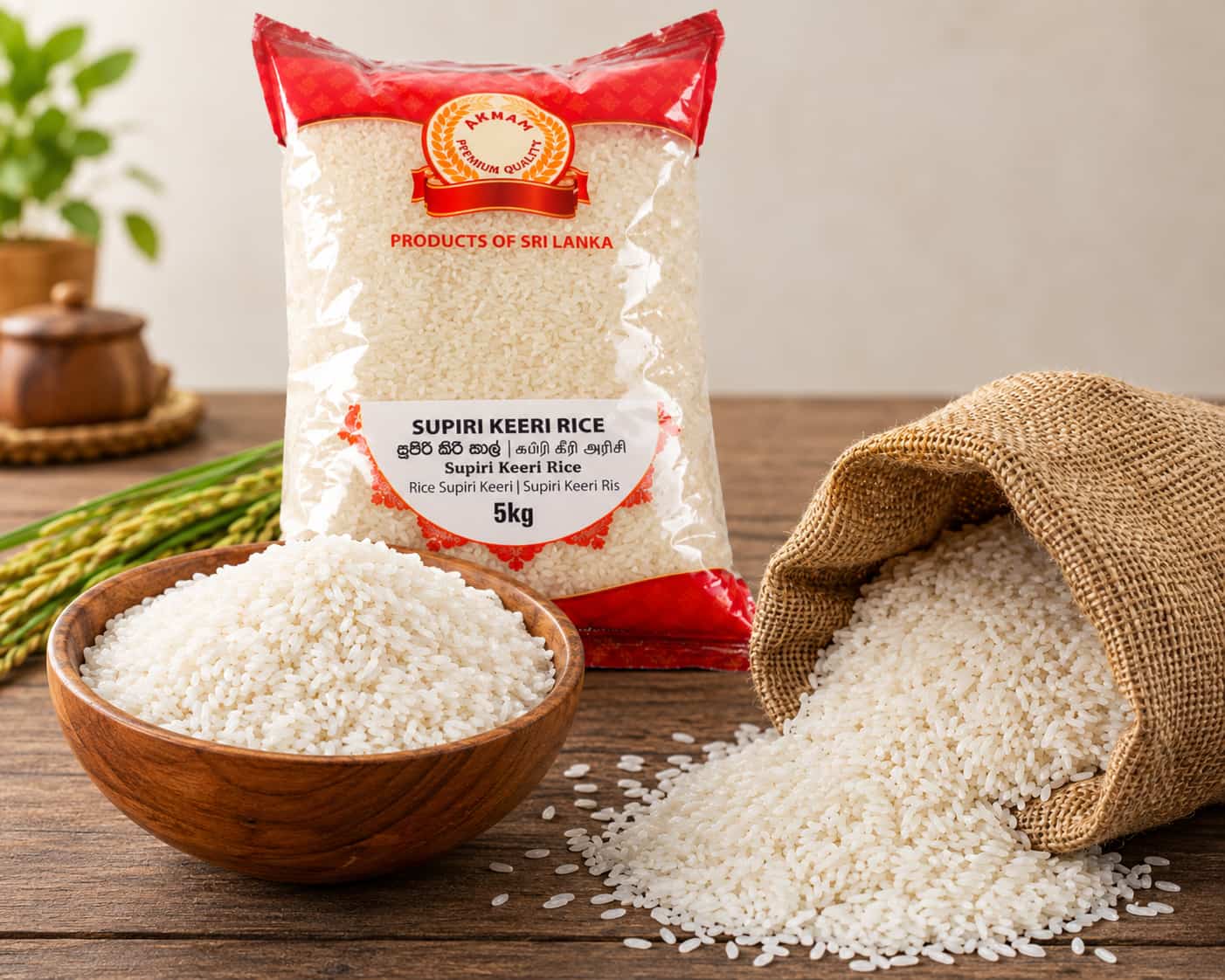
Keeri Samba Rice
Keeri Samba is another well-known Sri Lankan rice variety.
Its grains are small and distinctive, and it is particularly valued for its aroma and texture.
Keeri Samba is often associated with meals where the rice itself deserves a little more attention.
It can be used for everyday dishes, but many people also choose it for special meals and rice preparations.
What Can You Make With Keeri Samba?
Keeri Samba can work beautifully for:
- Rice and curry
- Special rice dishes
- Festive meals
- Biriyani-style preparations
Its distinctive grain and aroma can give the finished dish a different character from ordinary long-grain rice.
Nadu Rice
Nadu rice is another familiar choice in Sri Lankan cooking.
It is widely used as an everyday rice and works naturally with the curries Sri Lankan families prepare regularly.
If you’re simply making a plate of rice, dhal, vegetables and curry, Nadu can be a practical option.
Like other rice types, the exact texture can vary depending on the product and how it is cooked.
What Can You Eat With Nadu Rice?
Nadu is versatile enough for everyday meals such as:
- Rice and dhal
- Chicken curry
- Fish curry
- Vegetable curry
- Sambols
- Other home-style Sri Lankan curries
It’s the kind of rice that doesn’t need a special occasion.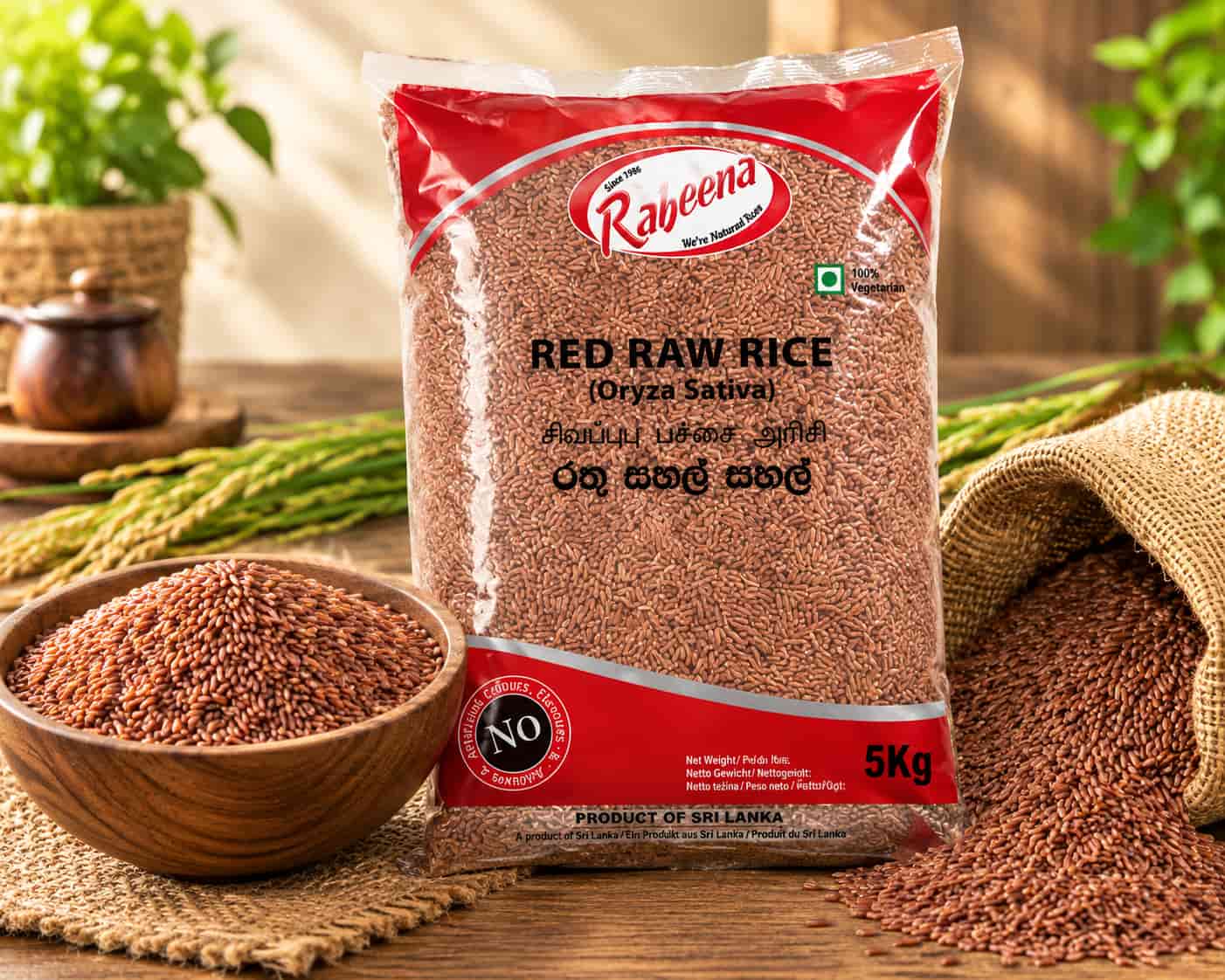
Sri Lankan Red Rice
Red rice is immediately recognisable because of its darker reddish colour.
It also has a different flavour and texture compared with familiar white rice varieties.
For many Sri Lankans, red rice is simply another normal part of home cooking rather than something unusual.
It can be eaten with many of the same curries you would serve with white rice.
What Can You Eat With Red Rice?
Try red rice with:
- Dhal curry
- Coconut sambol
- Fish curry
- Vegetable curries
- Chicken curry
The stronger character of the rice can work particularly well with simple Sri Lankan curries and sambols.
Red rice flour is also used for some traditional Sri Lankan foods, connecting rice to dishes beyond the usual plate of rice and curry.
What Is Muthu Samba Rice?
Depending on the brands and products available where you shop, you may also come across names such as Muthu Samba.
This is another type of Samba-style rice familiar to Sri Lankan shoppers.
As with any packaged rice, characteristics can differ between varieties and brands, so it’s useful to read the product information and cooking instructions.
If you’ve grown up with a particular rice brand or variety, you’ll probably notice that even small differences in texture can change how familiar a meal feels.
That’s one reason Sri Lankans living overseas often look specifically for the rice varieties they remember from home.
Samba vs Nadu Rice — What’s the Difference?
This is a common question, especially if you’re standing in front of several bags of Sri Lankan rice and aren’t sure which one to choose.
The most noticeable difference is often the grain and resulting texture.
Samba varieties are generally known for their smaller grains and distinctive eating texture.
Nadu is another popular everyday rice with its own grain and cooking characteristics.
Which should you buy?
That depends on what you like.
If you’re already familiar with one variety from home, start there.
If you’re new to Sri Lankan rice, try both.
Food is often the easiest way to understand the difference.
What Is the Best Rice for Sri Lankan Rice and Curry?
There isn’t one answer that applies to every household.
Samba, Nadu, red rice and other varieties can all be eaten with Sri Lankan curries.
The better question is:
What texture and flavour do you prefer?
For a familiar everyday meal, choose the rice your family enjoys.
If you’re cooking for the first time, Samba or Nadu can be good places to begin.
Then experiment with red rice and other varieties.
Eventually, you’ll probably develop your own favourite.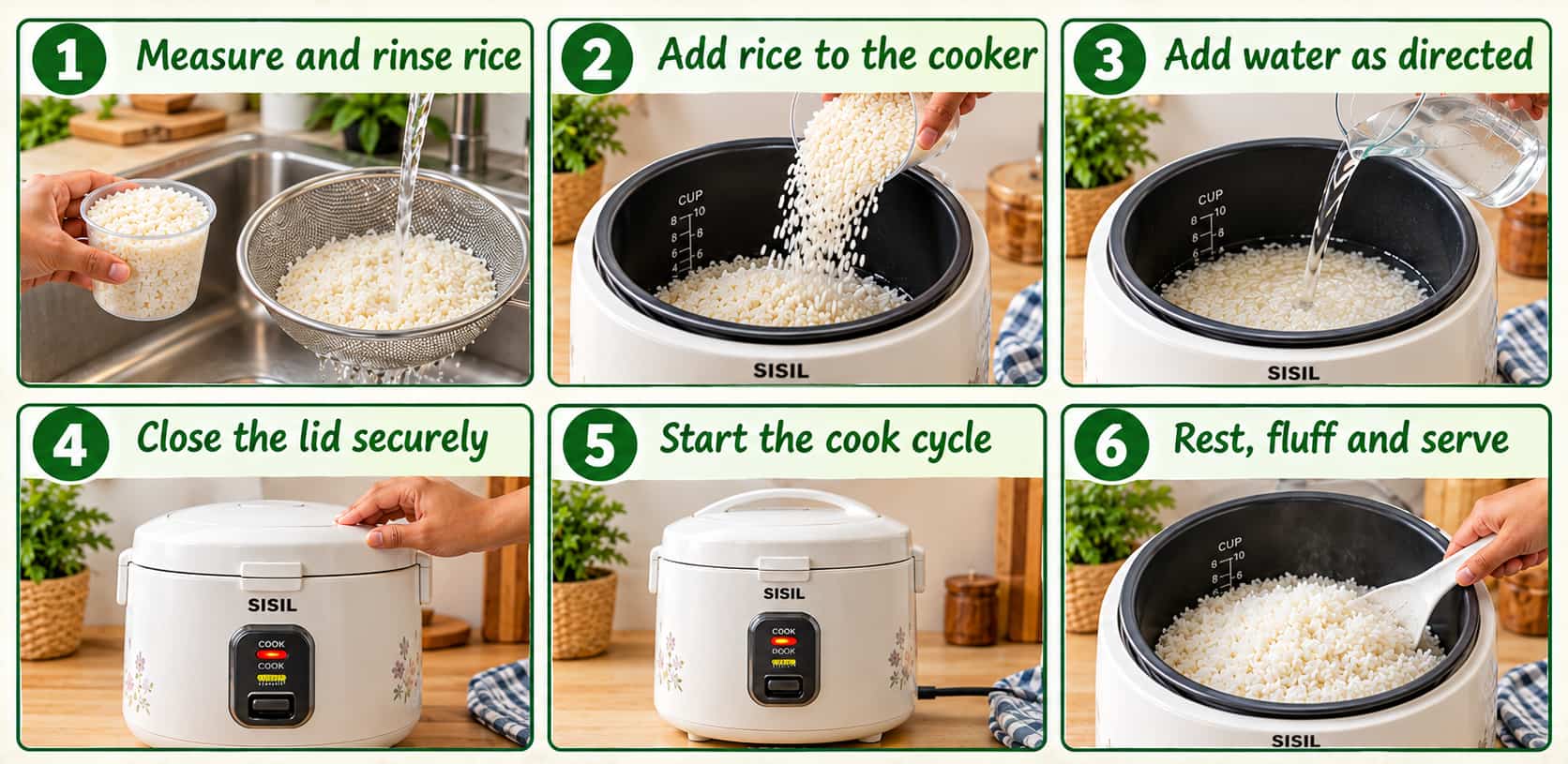
How to Cook Sri Lankan Rice
The cooking method depends on the type of rice you’re using.
That’s important.
Not every rice needs exactly the same amount of water or cooking time.
Step 1 — Measure the Rice
Decide how much rice you need depending on the number of people you’re serving.
Remember that rice expands during cooking.
Step 2 — Wash the Rice
Rinse the rice with clean water.
Many households wash it several times before cooking.
Step 3 — Add the Correct Amount of Water
The amount of water can vary depending on the rice variety and cooking method.
If you’re using packaged rice, check the instructions provided by the manufacturer.
Step 4 — Cook Until Tender
Rice can be prepared using a rice cooker or on the stovetop.
The goal is properly cooked rice with the texture appropriate for that particular variety.
Step 5 — Let It Rest
After cooking, allowing the rice to rest briefly can help the texture settle before serving.
Simple.
But when you’re eating rice almost every day, getting those small things right makes a difference.
What Makes a Traditional Sri Lankan Rice and Curry Meal?
Here’s where all the recipes we’ve been building start coming together.
Start with your rice.
Then add:
Dhal Curry
Creamy, comforting and simple.
Chicken Curry or Fish Curry
Something with deeper spice and plenty of flavour.
A Vegetable Curry
Something different in colour and texture.
Pol Sambol
For coconut, chilli, onion and freshness.
Now you have a simple Sri Lankan rice and curry plate.
It doesn’t need ten different dishes.
The idea is to combine several flavours so they complement each other.
Rice Is More Than Just Rice and Curry
Rice is also connected to many other Sri Lankan foods.
Rice flour is used in traditional dishes such as:
- String Hoppers
- Pittu
- Hoppers
- Various sweets and snacks
That means rice can appear on a Sri Lankan table in completely different forms.
One morning, it might be string hoppers.
Another evening, Pittu.
At lunchtime, a plate of Samba rice and curry.
Understanding rice is therefore a useful starting point for understanding Sri Lankan cuisine as a whole.
What About String Hopper Flour and Pittu Flour?
If you’ve followed our recent guides, you’ve already seen how rice continues beyond ordinary cooked rice.
String hoppers are commonly prepared using rice-based flour.
Pittu can also be made using rice flour and other types of flour.
These specially prepared products make traditional dishes easier to make at home.
That’s particularly useful when you’re living outside Sri Lanka and don’t necessarily have access to the same ingredients or preparation methods your family used back home.
Our guides to Sri Lankan String Hoppers and Sri Lankan Pittu explain both dishes in more detail.
How Should You Store Rice at Home?
Rice is a pantry staple, so many families buy larger bags rather than small quantities.
Good storage matters.
Keep rice in a:
- Clean container
- Dry location
- Cool place
- Properly sealed container where possible
Moisture and pantry pests are the main things you want to avoid.
If you buy a large bag, transferring it into a suitable food-storage container can make everyday use easier and help keep your pantry organised.
Always follow any storage guidance provided on the packaging.
Why the Right Rice Can Bring Back Memories
It’s interesting how specific food memories can be.
Sometimes it isn’t just “rice” that you miss.
It’s a particular grain.
A particular texture.
The way it tastes with your mother’s dhal curry.
The rice your family always bought.
The smell when you open the rice cooker at lunchtime.
These things may seem small until you move somewhere where the familiar products aren’t always easy to find.
For Sri Lankans living overseas, finding the rice they grew up eating can make an ordinary curry feel much closer to home.
Finding Sri Lankan Rice in Germany and Europe
European supermarkets offer plenty of rice.
But that doesn’t necessarily mean you’ll find the Sri Lankan varieties you’re looking for.
If you specifically want Samba, Keeri Samba, red rice or other familiar Sri Lankan products, a specialist grocery store can make shopping much easier.
At LankaMart, we’re building a range of Sri Lankan rice, flour, spices, coconut products, snacks, tea and other everyday groceries.
So whether you’re preparing rice and curry for the family, making string hoppers for breakfast or trying Pittu for the first time, you can find many of the familiar ingredients together.
LankaMart delivers to customers in Germany, the Netherlands and other supported European countries.
Start With Rice and Build From There
If you’re completely new to Sri Lankan cooking, don’t make it complicated.
Choose a rice.
Make dhal.
Add one vegetable curry.
Try Pol Sambol.
Next time, make chicken curry.
Then fish curry.
Little by little, you’ll build a complete Sri Lankan meal.
And through all of those dishes, one thing will probably remain in the middle of the plate.
Rice.
Simple, familiar and at the heart of everyday Sri Lankan food.
Explore Sri Lankan rice, flour, spices and everyday groceries at LankaMart.
Frequently Asked Questions
What types of rice are popular in Sri Lanka?
Common varieties and styles include Samba, Keeri Samba, Nadu and red rice. Different households prefer different rice depending on texture, flavour and the meal being prepared.
What is the best rice for Sri Lankan rice and curry?
There isn’t one single best variety. Samba, Nadu and red rice can all work well with Sri Lankan curries, and the choice often comes down to personal or family preference.
What is Keeri Samba rice?
Keeri Samba is a Sri Lankan rice variety known for its small grain, distinctive aroma and texture. It can be eaten with curry and is also used for special rice dishes.
What is Sri Lankan red rice?
Sri Lankan red rice is a darker-coloured rice with a distinctive texture and flavour. It can be served with dhal, vegetable, fish and meat curries as part of everyday meals.
What is the difference between Samba and Nadu rice?
They differ in grain characteristics and resulting texture. Samba is generally associated with a smaller grain, while Nadu has its own texture and cooking characteristics. Preference varies between households.
Is rice flour used in Sri Lankan cooking?
Yes. Rice flour is important in traditional foods including string hoppers, Pittu, hoppers and various Sri Lankan snacks and sweets.
Where can I buy Sri Lankan rice in Europe?
Specialist Sri Lankan grocery stores such as LankaMart offer Sri Lankan rice and flour products online, with delivery to Germany, the Netherlands and other supported European countries.