Quick Answer
Pittu is a traditional Sri Lankan food made primarily from flour and grated coconut, combined into a crumbly mixture and steamed. It is commonly eaten for breakfast or dinner with coconut milk, dhal curry, Pol Sambol, fish curry, chicken curry or other accompaniments. Pittu can be made with different types of flour, giving it different colours, textures and flavours.
Introduction
Some Sri Lankan foods don’t need to be complicated to feel special.
Pittu is one of them.
Flour.
Coconut.
A little water.
Then steam.
The ingredients sound incredibly simple, but anyone who grew up eating Pittu knows how satisfying it can be.
A warm piece of Pittu with coconut milk poured over it.
A little Pol Sambol on the side.
Maybe dhal, chicken curry or a good fish curry.
Suddenly, a few simple ingredients become a proper meal.
For many Sri Lankan families, Pittu is a familiar breakfast or dinner. And like so many traditional foods, everyone seems to have their favourite way of eating it.
If you’ve never tried Pittu before, here’s everything you need to know.
What Is Sri Lankan Pittu?
Pittu is a traditional steamed food commonly eaten in Sri Lanka.
It is made by combining flour with grated coconut and carefully adding moisture until the mixture develops its characteristic crumbly texture.
The mixture is then steamed, traditionally inside a cylindrical Pittu steamer.
Once cooked, the Pittu comes out as a firm cylinder that can be broken or cut into portions before serving.
On its own, Pittu has a relatively mild flavour.
That’s exactly what makes it so versatile.
It can absorb coconut milk and curry gravy while still keeping its distinctive texture.
What Is Pittu Made From?
The exact recipe can vary depending on the type of Pittu being prepared.
But the basic ingredients are surprisingly simple.
Flour
Flour forms the main base.
Different flours can be used, and you’ll find several varieties of Pittu across Sri Lankan cooking.
Specially prepared Pittu Flour or Pittu Podi can make preparation more convenient, particularly if you’re making it at home for the first time.
Grated Coconut
Coconut is mixed through the flour and gives Pittu its familiar texture and subtle richness.
Like Pol Sambol, coconut milk and many Sri Lankan curries, Pittu is another good example of just how important coconut is to Sri Lankan cuisine.
Water
Only enough water is added to create the correct crumbly texture.
This is one of the most important parts of making good Pittu.
You’re not trying to create a wet dough.
Salt
A little salt helps bring out the flavour of the flour and coconut.
And that’s basically the foundation.
Simple ingredients, but the technique makes the difference.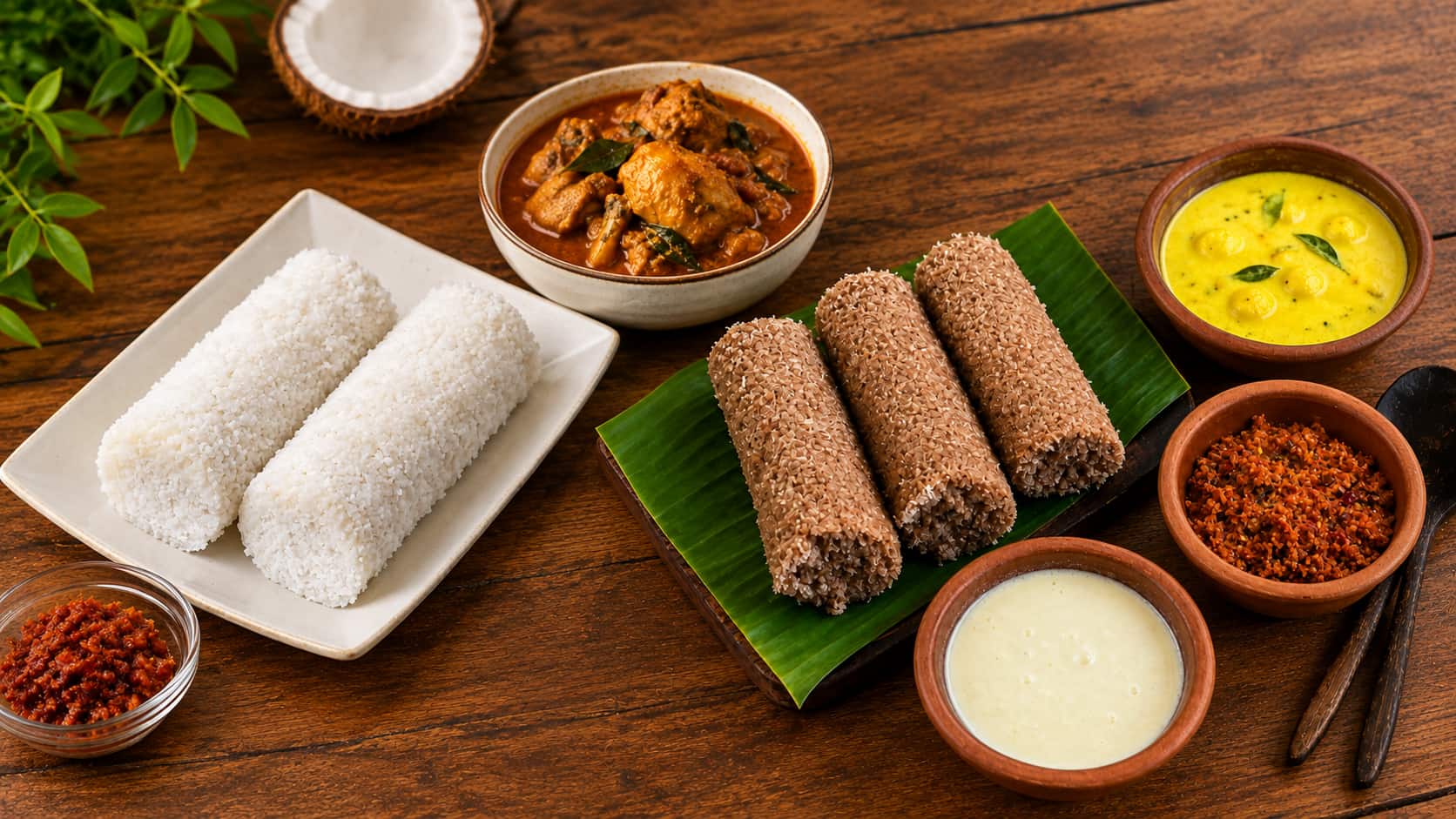
What Types of Pittu Are There?
Not every Pittu looks or tastes exactly the same.
The type of flour used can create different versions.
Rice Flour Pittu
Rice flour is commonly used to prepare Pittu.
It creates the familiar light-coloured version many people recognise.
Red Rice Pittu
Red rice flour can also be used.
This gives the Pittu a darker colour and slightly different flavour and texture.
Sri Lanka has a long tradition of different rice varieties, and red rice appears in many everyday meals.
Ragi Pittu
You may also come across Ragi Pittu, prepared using finger millet flour.
If you’re shopping for Sri Lankan or South Asian ingredients, you might see products labelled Ragi Puttu Podi or similar names.
Each version has its own character, but the basic idea remains the same: flour and coconut prepared into a crumbly mixture and steamed.
How Is Sri Lankan Pittu Made?
Making Pittu isn’t particularly complicated.
But getting the texture right takes a little practice.
Step 1 — Prepare the Flour
Place your Pittu flour into a large bowl.
If you’re using packaged Pittu flour, check the preparation instructions on the packet because different products may require slightly different methods.
Step 2 — Add Salt
Add a small amount of salt and combine it with the flour.
Step 3 — Add Water Gradually
This is the important part.
Sprinkle water gradually while mixing the flour with your fingers.
Don’t pour in too much at once.
You’re looking for a crumbly texture rather than a smooth dough.
The flour should hold together slightly when pressed but separate easily again.
Step 4 — Add Grated Coconut
Mix grated coconut through the prepared flour.
The coconut should be distributed throughout the mixture rather than sitting in one large clump.
Step 5 — Fill the Pittu Steamer
Traditionally, the mixture is placed inside a cylindrical Pittu steamer.
Depending on the method, layers of flour mixture and coconut may also be used.
Don’t pack everything too tightly.
Steam needs to move through the mixture.
Step 6 — Steam the Pittu
Steam until the Pittu is properly cooked.
Once ready, carefully remove it from the steamer.
You should have the familiar cylindrical Pittu ready to serve.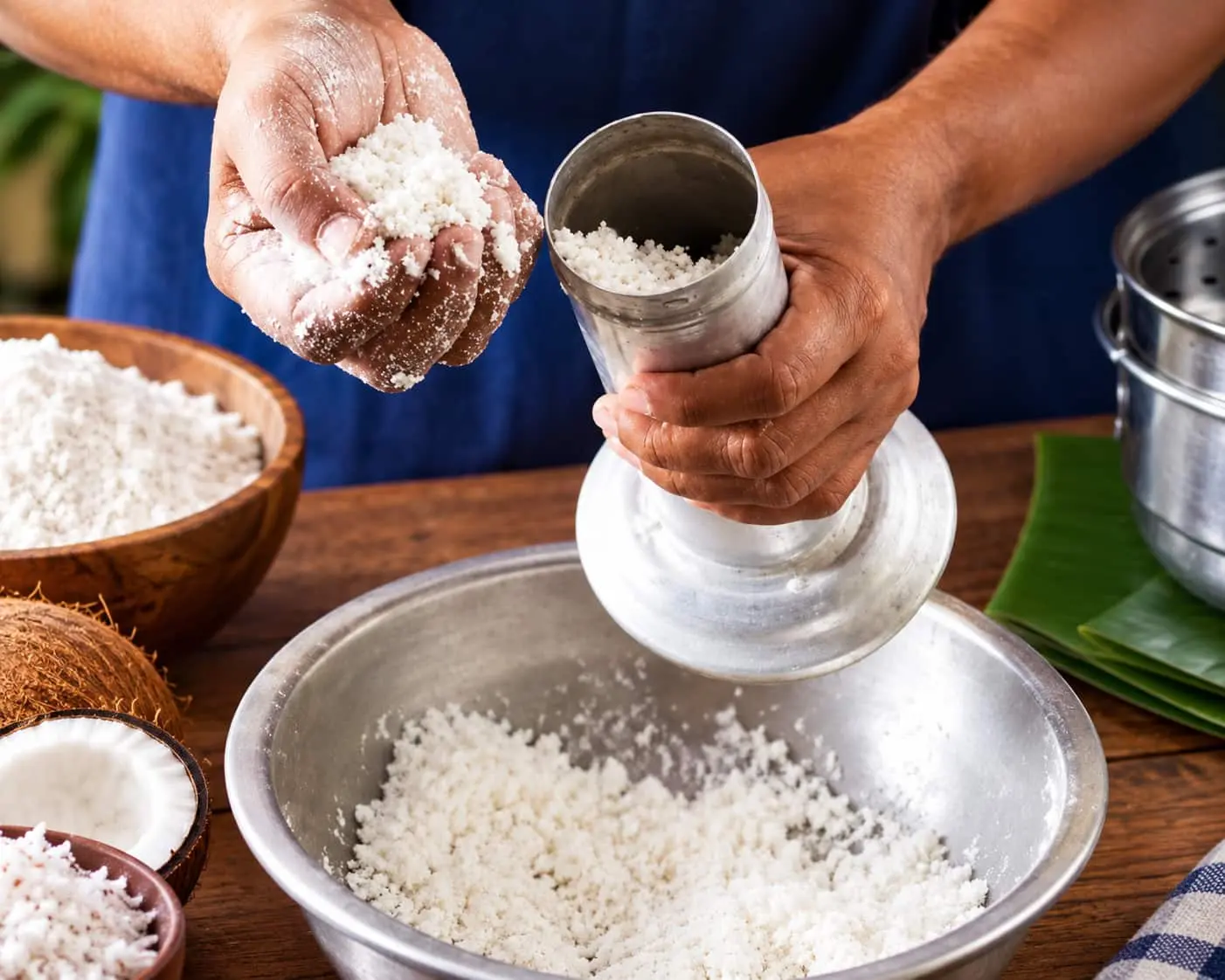
What Is a Pittu Steamer?
Traditional Pittu is usually prepared using a special steaming tool.
It generally consists of a narrow cylindrical section that holds the Pittu mixture and a steaming base or pot underneath.
Steam rises through the cylinder and cooks the mixture.
In Sri Lanka, seeing the long cylinder of a Pittu steamer in the kitchen is completely normal.
If you plan to make Pittu regularly, having the right equipment makes the process much easier.
What Do Sri Lankans Eat With Pittu?
This is where Pittu becomes really interesting.
Because Pittu itself is mild, you can pair it with several different flavours.
Coconut Milk
One of the most familiar ways to eat Pittu is with coconut milk.
Pouring coconut milk over warm Pittu adds moisture and richness.
The Pittu absorbs the coconut milk beautifully.
Then add something spicy alongside it and you have a wonderful balance.
Pol Sambol
Pol Sambol is almost made for foods like Pittu.
The chilli, onion and lime bring freshness and heat, while the coconut connects naturally with the coconut already used in the Pittu.
If you haven’t made it before, follow our guide to How to Make Authentic Sri Lankan Pol Sambol at Home.
Dhal Curry
Dhal is another excellent choice.
Creamy dhal curry works its way into the crumbly Pittu and makes the whole meal softer and richer.
Our Sri Lankan Dhal Curry guide is a good place to start if you’re learning both dishes.
Chicken Curry
If you want a more substantial meal, add chicken curry.
A rich Sri Lankan chicken curry provides plenty of gravy for the Pittu to absorb.
Fish Curry
Fish curry works just as well.
A spicy or slightly sour fish curry provides a stronger contrast to the mild Pittu and coconut.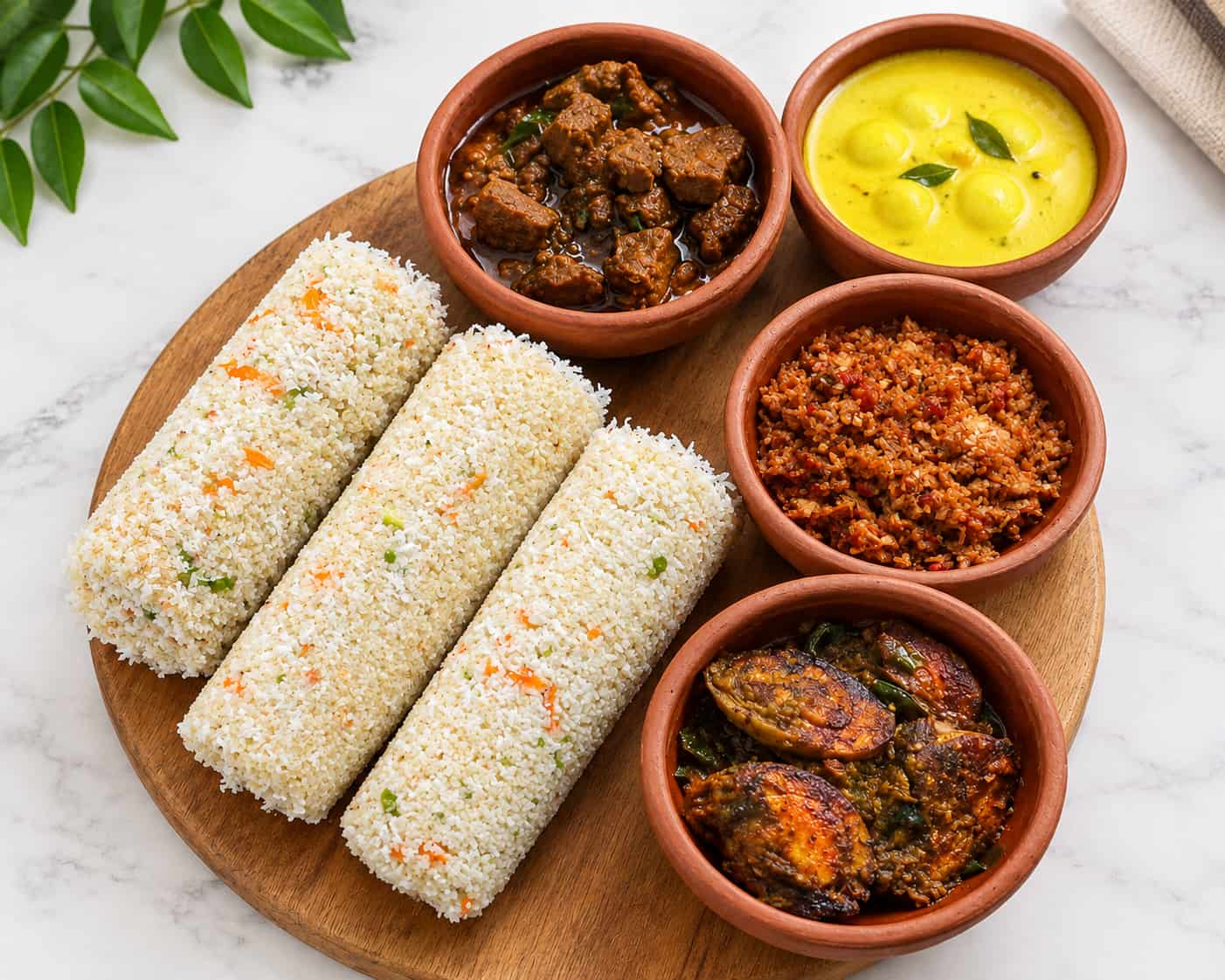
Pittu With Coconut Milk and Pol Sambol
If you’re trying Pittu for the first time, this is a great combination.
Start with warm Pittu.
Add coconut milk.
Then take a little Pol Sambol with each bite.
The coconut milk provides richness.
The Pol Sambol provides heat and acidity.
The Pittu brings everything together.
You don’t necessarily need several curries around it.
Sometimes the simplest combinations are the ones people remember most.
Is Pittu the Same as String Hoppers?
No.
Both are popular Sri Lankan foods and both are often eaten for breakfast or dinner, but they’re quite different.
Pittu is a crumbly steamed mixture made from flour and coconut.
String hoppers are thin strands of rice-flour dough pressed into small nests and steamed.
The textures are completely different.
But interestingly, many of the foods served alongside them are similar.
Dhal.
Pol Sambol.
Coconut-based gravies.
Chicken curry.
Fish curry.
If you’ve read our guide to Sri Lankan String Hoppers, you’ll begin to see how these traditional foods connect.
Is Pittu the Same as Puttu?
You may see both spellings when searching online or shopping for flour.
Pittu is the spelling commonly used in Sri Lanka, while puttu is another widely used name for related steamed flour-and-coconut dishes in South India, particularly Kerala.
The dishes share similarities, although ingredients, accompaniments and preparation traditions can vary between regions.
When you’re shopping for ingredients, you may therefore see product names such as:
- Pittu Flour
- Puttu Flour
- Pittu Podi
- Puttu Podi
- Ragi Puttu Podi
Checking the product instructions can help you understand exactly how that particular flour should be prepared.
When Do Sri Lankans Eat Pittu?
Pittu is commonly eaten for breakfast or dinner.
It’s filling enough to make a proper meal but flexible enough to work with whatever curries or sambols you have available.
For some families, Pittu might be a regular weekday dinner.
For others, it may be something prepared when everyone has a little more time to sit together and enjoy the meal.
Like string hoppers, it is one of those foods where the accompaniments can change depending on what’s available in the kitchen.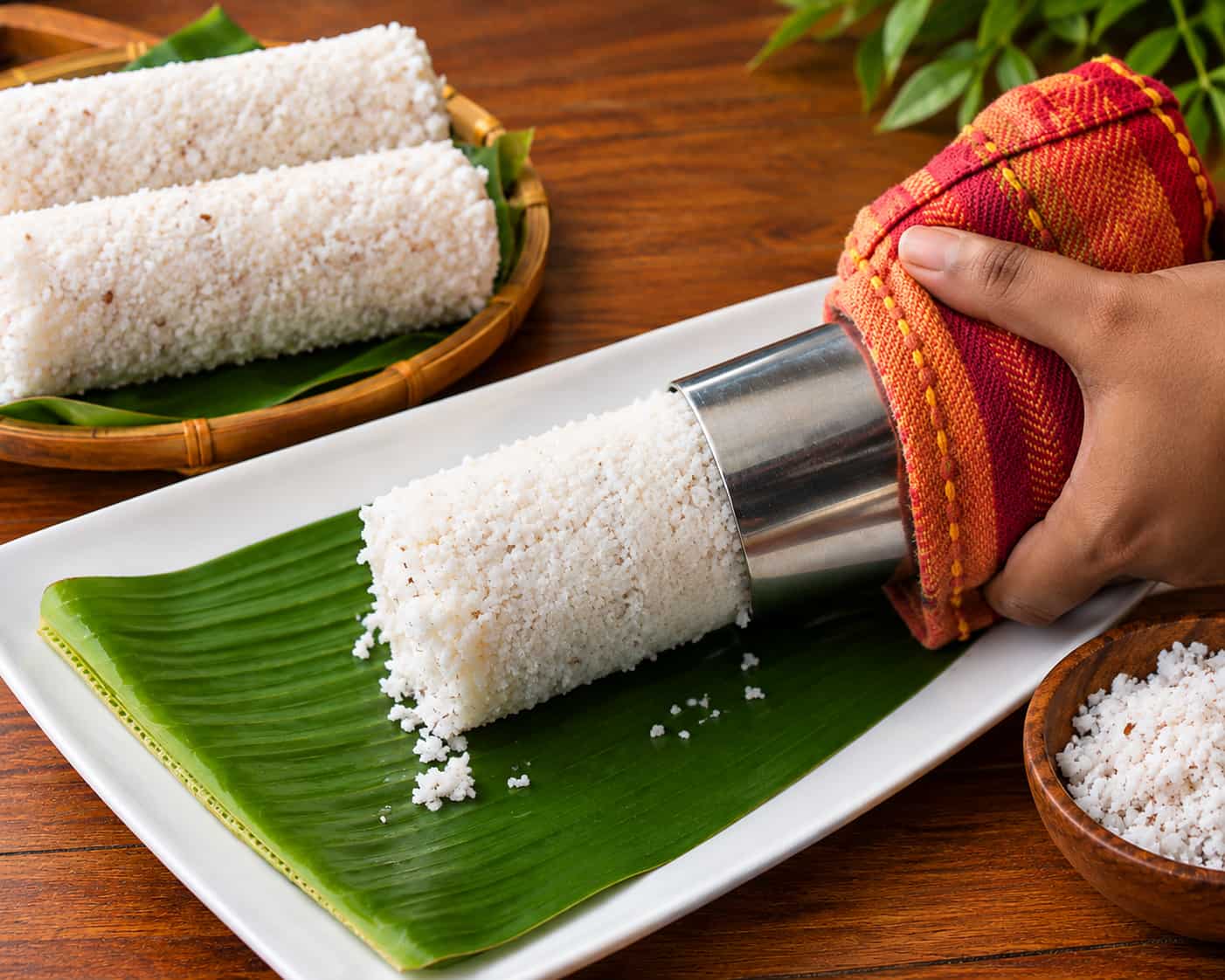
Can Beginners Make Pittu at Home?
Yes.
The ingredient list is simple.
The part that requires practice is getting the flour mixture right.
Remember:
Don’t add all the water at once.
Add it gradually.
Use your fingers to work the moisture through the flour.
You’re looking for a loose, crumbly texture rather than bread-like dough.
And don’t worry if your first attempt isn’t perfect.
Traditional foods often look easy when you’ve watched someone make them for years.
Actually doing it yourself is how you learn.
After a few attempts, you’ll start recognising the right texture without having to think about it.
Pittu, String Hoppers and the Sri Lankan Breakfast Table
Now that we’ve covered both Pittu and string hoppers, you can start to see something interesting about Sri Lankan breakfasts.
The main food can be quite simple.
Pittu itself is mild.
String hoppers are mild.
Hoppers can also act as a base.
The variety comes from everything served alongside them.
Dhal adds creaminess.
Pol Sambol adds chilli and freshness.
Coconut milk adds richness.
Chicken or fish curry adds deeper spice and flavour.
This combination of several different dishes is one of the things that makes Sri Lankan food so enjoyable.
One plate can have several completely different flavours.
Why Coconut Appears Everywhere in Sri Lankan Food
If you’ve been following our Sri Lankan food guides, you’ve probably noticed something by now.
Coconut keeps appearing.
Pol Sambol uses grated coconut.
Dhal can contain coconut milk.
Many curries use coconut milk.
Pittu combines flour with coconut.
Sri Lankan sweets and snacks often use coconut too.
That’s not a coincidence.
Coconut has an important place in Sri Lankan cooking and has been used in countless everyday recipes for generations.
Understanding how coconut is used is therefore one of the easiest ways to better understand Sri Lankan cuisine.
We’ll explore this more deeply in our upcoming guide to Coconut Milk in Sri Lankan Cooking.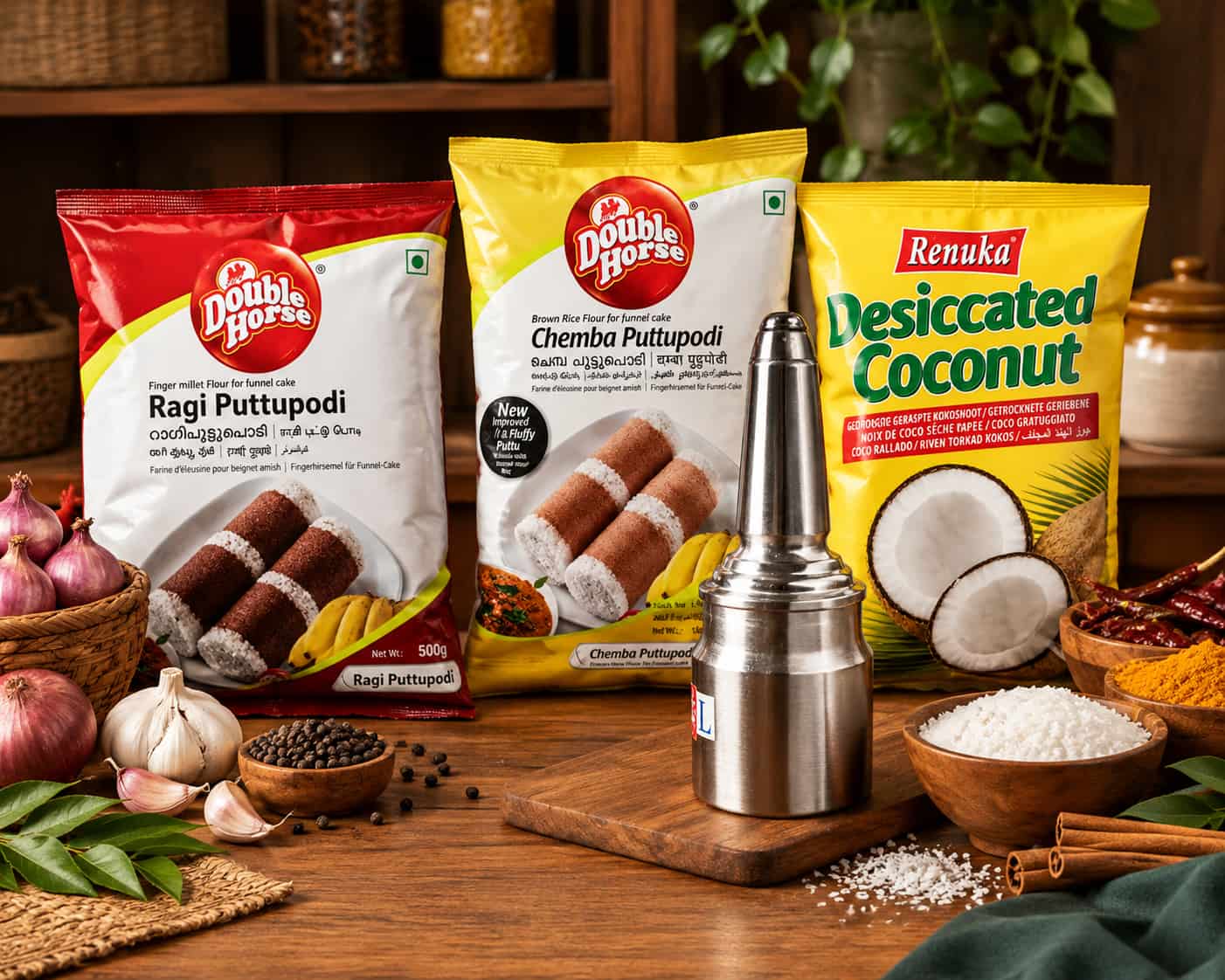
Finding Pittu Flour in Germany and Europe
If you’re living outside Sri Lanka, finding the right flour can sometimes be the hardest part of making traditional food.
You may find ordinary rice flour in a European supermarket, but products specifically prepared for Sri Lankan dishes aren’t always as easy to find.
Specialist Sri Lankan grocery stores make this much simpler.
At LankaMart, you can explore rice and flour products alongside spices, coconut products, curry ingredients, tea, snacks and other familiar Sri Lankan groceries.
So whether you’re making Pittu, string hoppers, dhal or a complete rice and curry meal, you can keep the essentials together in your pantry.
LankaMart delivers to customers in Germany, the Netherlands and other supported European countries.
Sometimes the Simplest Food Feels Most Like Home
Pittu isn’t a complicated dish.
And that’s part of its charm.
A few basic ingredients.
A little steam.
Some coconut milk.
A spoonful of Pol Sambol.
Maybe a curry on the side.
For someone discovering Sri Lankan food, it’s a chance to try something completely different.
For someone who grew up in Sri Lanka, it might simply taste like breakfast at home.
And sometimes that’s exactly what you’re looking for.
Explore Sri Lankan flour, coconut products, spices and everyday cooking essentials at LankaMart.
Frequently Asked Questions
What is Sri Lankan Pittu?
Pittu is a traditional Sri Lankan steamed food made primarily from flour and grated coconut. It is commonly eaten with coconut milk, sambols and curries.
What is Pittu made from?
Pittu is generally made from flour, grated coconut, water and salt. Different types of flour can be used to create different varieties.
What do Sri Lankans eat with Pittu?
Pittu is commonly eaten with coconut milk, Pol Sambol, dhal curry, chicken curry and fish curry.
Is Pittu eaten for breakfast or dinner?
Both. Pittu is commonly enjoyed as a Sri Lankan breakfast or evening meal.
What is the difference between Pittu and string hoppers?
Pittu is a steamed, crumbly mixture of flour and coconut. String hoppers are thin strands of rice-flour dough pressed into small nests and steamed.
Is Pittu the same as Puttu?
The names refer to closely related steamed flour-and-coconut foods. Pittu is a common Sri Lankan spelling, while puttu is widely used for related South Indian preparations. Regional recipes and accompaniments can vary.
Where can I buy Pittu Flour in Europe?
Specialist Sri Lankan grocery stores such as LankaMart offer Sri Lankan rice and flour products and other cooking ingredients online, with delivery to Germany, the Netherlands and other supported European countries.