String Hoppers: What They Are & How to Eat Them
Quick Answer
String hoppers, known as indi appa in Sinhala and idiyappam in Tamil, are thin steamed rice-flour noodles pressed into small round nests. In Sri Lanka, they are commonly eaten for breakfast or dinner with curries, dhal, coconut sambol and other accompaniments. Their mild flavour makes them perfect for absorbing rich Sri Lankan curries.
Introduction
There are certain foods that immediately feel like Sri Lanka.
String hoppers are definitely one of them.
A plate stacked with soft string hoppers.
A bowl of warm dhal curry.
Fresh Pol Sambol on the side.
Maybe another curry to bring everything together.
For many Sri Lankan families, that’s a familiar breakfast or dinner.
String hoppers themselves are actually quite simple. They’re primarily made from flour and water, yet the dishes served around them can turn them into a complete meal.
If you’ve never tried them before, they may look unusual at first.
Hundreds of very thin noodles are pressed together into small circular nests and steamed until soft.
But once you understand what they are and how Sri Lankans eat them, you’ll understand why they’re such a familiar part of Sri Lankan food culture.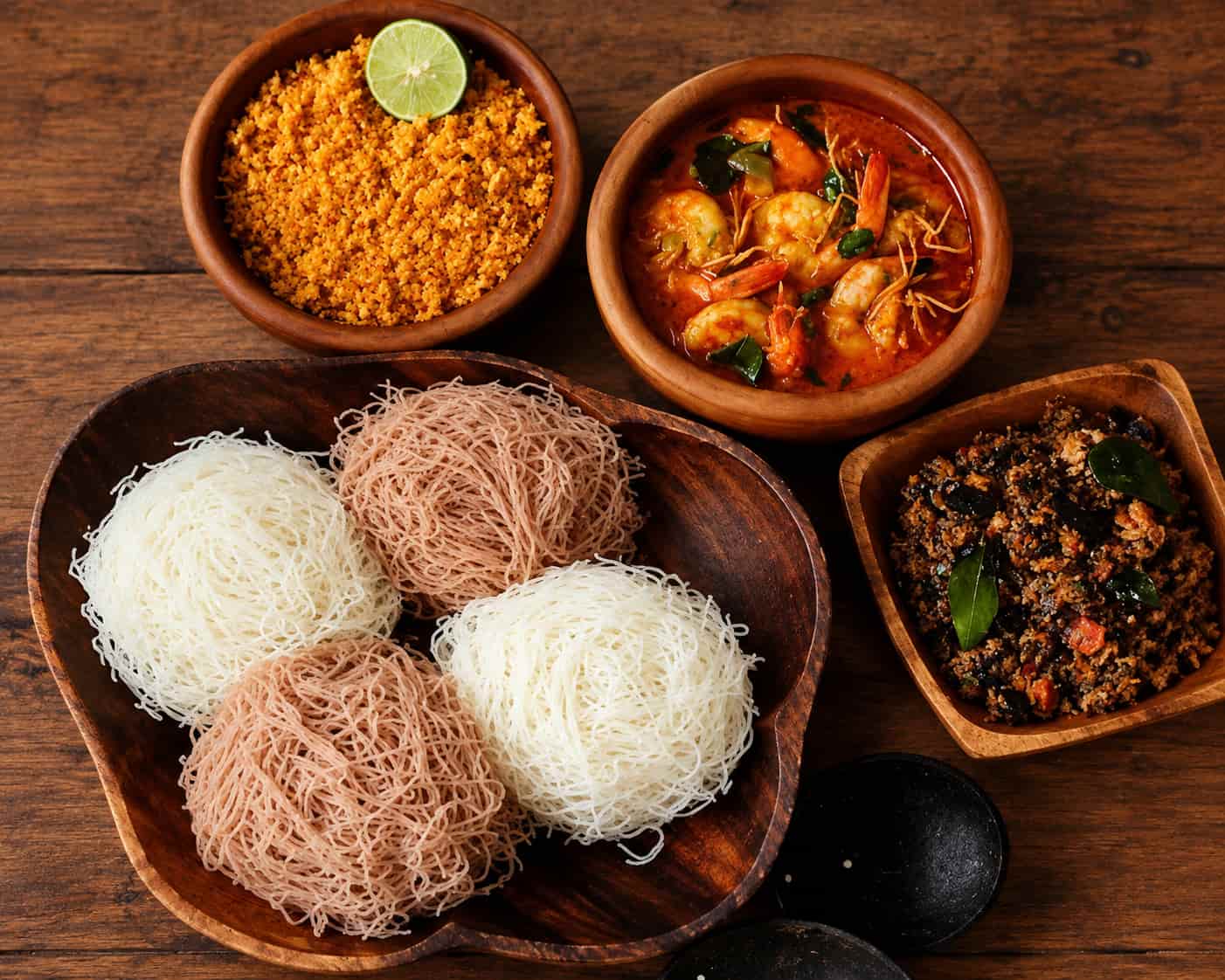
What Are Sri Lankan String Hoppers?
String hoppers are a traditional food made by pressing prepared flour dough through a special string hopper press.
The press creates very thin strands.
These strands are arranged into small circular nests on string hopper mats or trays and then steamed.
The result is soft, delicate and relatively neutral in flavour.
And that’s exactly what makes string hoppers so useful.
They don’t need to compete with the curries served alongside them.
Instead, the fine noodles absorb the gravy and flavours from dhal, coconut-based curries and other accompaniments.
In Sri Lanka, string hoppers are widely enjoyed as a breakfast or evening meal.
What Are String Hoppers Called in Sri Lanka?
In Sinhala, string hoppers are commonly known as indi appa.
In Tamil, they are commonly known as idiyappam.
If you’re searching for them or their ingredients outside Sri Lanka, you may therefore come across several names.
You might see:
- String Hoppers
- Indi Appa
- Idiyappam
- String Hopper Flour
- Idiyappam Flour
Although names can vary, they generally refer to the familiar steamed noodle nests enjoyed throughout Sri Lanka and other parts of South Asia.
What Are String Hoppers Made From?
Traditional string hoppers have a surprisingly short ingredient list.
The main ingredient is usually rice flour.
Water and salt are then used to prepare the dough.
Simple ingredients.
But getting the dough consistency right matters.
If the dough is too dry, pressing it into fine strings becomes difficult.
If it’s too wet, the noodles may not hold their shape properly.
That’s why many people use specially prepared String Hopper Flour.
It makes the process more convenient, particularly when you’re preparing string hoppers at home.
Is String Hopper Flour the Same as Normal Rice Flour?
Not necessarily.
Although rice is the main ingredient, flour sold specifically for making string hoppers is prepared with this use in mind.
Different products can vary, so it’s always worth checking the package instructions.
If you’re new to making string hoppers, using a flour intended specifically for string hoppers can make the process easier than experimenting with an unsuitable flour.
For Sri Lankans living abroad, this is one of those products that can sometimes be difficult to find in an ordinary European supermarket.
Specialist Sri Lankan grocery stores are usually a much easier place to look.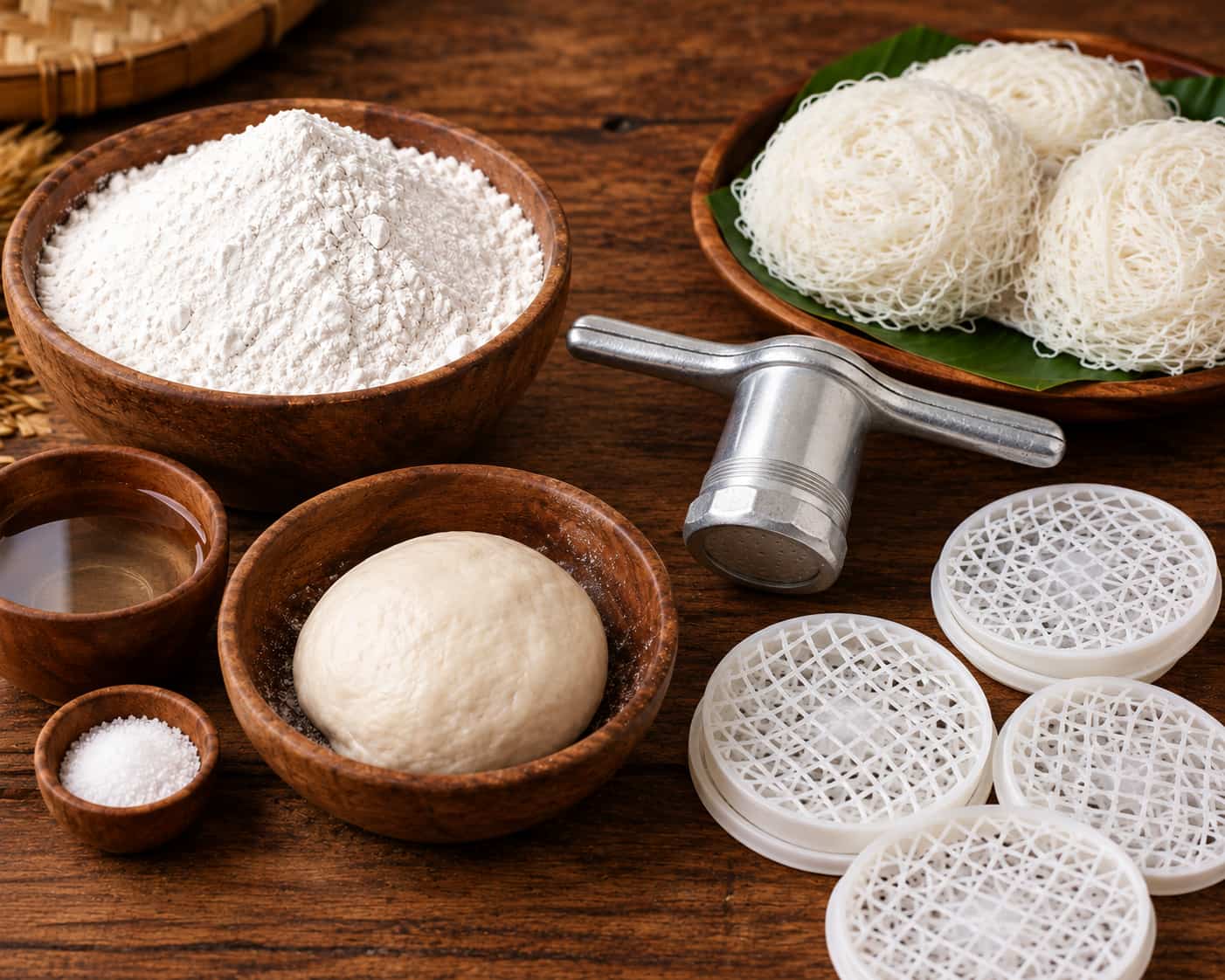
How Are String Hoppers Made?
Making string hoppers becomes much easier once you understand the basic process.
The exact instructions may vary depending on the flour you’re using, so always check the product packaging as well.
Step 1 — Prepare the Flour
Place your string hopper flour in a suitable bowl.
Depending on the product and traditional method you’re following, the flour may require particular preparation before making the dough.
Follow the instructions for the flour you’re using.
Step 2 — Add Water
Water is gradually combined with the flour to create a soft dough.
Add it carefully rather than pouring everything in at once.
The goal is to create dough that can pass smoothly through the string hopper press while still holding its shape.
Step 3 — Fill the String Hopper Press
Place a portion of the prepared dough inside your string hopper press.
The press has small holes that turn the dough into very thin strands.
Step 4 — Press the Noodles
Press the dough onto string hopper mats or suitable steaming trays.
Move the press in a circular motion so the thin noodles overlap and form a small round nest.
This is what creates the familiar string hopper shape.
Step 5 — Steam
The prepared string hoppers are then steamed until cooked.
Once ready, carefully remove them from the mats.
They should be soft but still hold their shape.
And that’s it.
The real excitement comes from deciding what you’re going to eat with them.
What Do Sri Lankans Eat With String Hoppers?
String hoppers are rarely the strongest flavour on the table.
Instead, they create the base for everything around them.
Here are some of the most familiar combinations.
Dhal Curry
String hoppers and dhal curry are a wonderfully comforting combination.
The thin noodles absorb the creamy dhal, making every bite soft and flavourful.
If you’re just beginning to explore Sri Lankan cooking, this is one of the easiest combinations to try.
We’ve already covered How to Make Authentic Sri Lankan Dhal Curry at Home, so you can prepare both dishes together.
Pol Sambol
Then you need something with a little more personality.
That’s where Pol Sambol comes in.
Fresh coconut, chilli, onion and lime provide heat and freshness alongside the softer string hoppers and dhal.
A little Pol Sambol goes a long way.
You can follow our Sri Lankan Pol Sambol guide if you’d like to prepare it yourself.
Coconut Milk Gravy
String hoppers are also commonly served with coconut milk-based accompaniments.
One well-known example is kiri hodi, a mild coconut milk gravy that pairs naturally with string hoppers.
Its creamy flavour works particularly well when there is something spicy, such as Pol Sambol, alongside it.
Chicken Curry
Want something richer?
Add Sri Lankan chicken curry.
The string hoppers absorb the curry gravy beautifully.
Dhal, chicken curry and Pol Sambol together can turn a simple plate of string hoppers into a substantial Sri Lankan meal.
Fish Curry
Fish curry can also work wonderfully with string hoppers.
A flavourful curry gravy combined with the soft noodles makes a satisfying breakfast or dinner.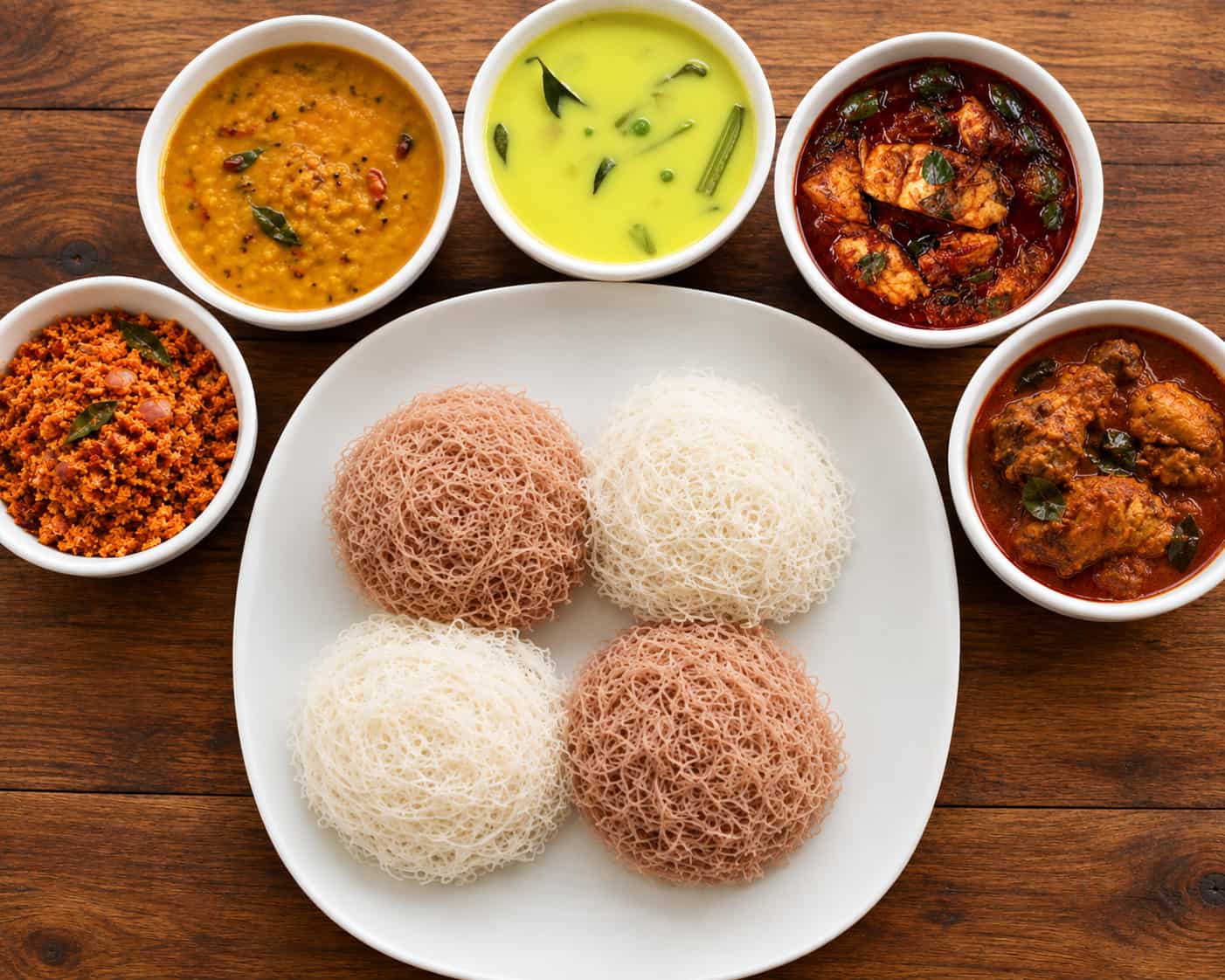
What Is Kiri Hodi?
If you’re learning about string hoppers, you’ll probably come across the name kiri hodi.
Kiri hodi is a Sri Lankan coconut milk gravy.
Compared with many Sri Lankan curries, it can be relatively mild.
That makes it an excellent partner for something spicy like Pol Sambol.
The combination works because each part of the meal contributes something different.
String hoppers provide the base.
Kiri hodi provides creamy coconut flavour.
Pol Sambol provides chilli, acidity and freshness.
Together, they create a meal from ingredients that are individually quite simple.
We’ll cover traditional Kiri Hodi separately in a future LankaMart guide.
Are String Hoppers the Same as Hoppers?
No.
The names can be confusing if you’re discovering Sri Lankan food for the first time.
String hoppers are made from thin strands of dough pressed into noodle-like nests and steamed.
Hoppers, also known as appa, are bowl-shaped and prepared from a batter.
They have a completely different appearance and texture.
An egg hopper is another popular variation where an egg is cooked inside the hopper.
Both are important Sri Lankan foods, but they’re not the same thing.
Are String Hoppers the Same as Noodles?
They look like very fine noodles, but Sri Lankans don’t usually eat string hoppers in the same way you might eat a bowl of noodles.
You generally don’t stir-fry them or cover them with a noodle sauce.
Instead, they’re served as the carbohydrate base of a meal.
Think of them more like rice.
You place several string hoppers on your plate and eat them with curries and sambols.
Their mild flavour allows them to absorb everything around them.
When Do Sri Lankans Eat String Hoppers?
String hoppers are particularly popular for breakfast and dinner.
A weekend breakfast with string hoppers, dhal and Pol Sambol is familiar to many Sri Lankan families.
They can also be served when guests visit or when the family wants something different from rice.
Preparing a large number by hand can take some time, especially when you’re cooking for several people.
That may be why seeing a big stack of freshly made string hoppers on the table can feel a little special.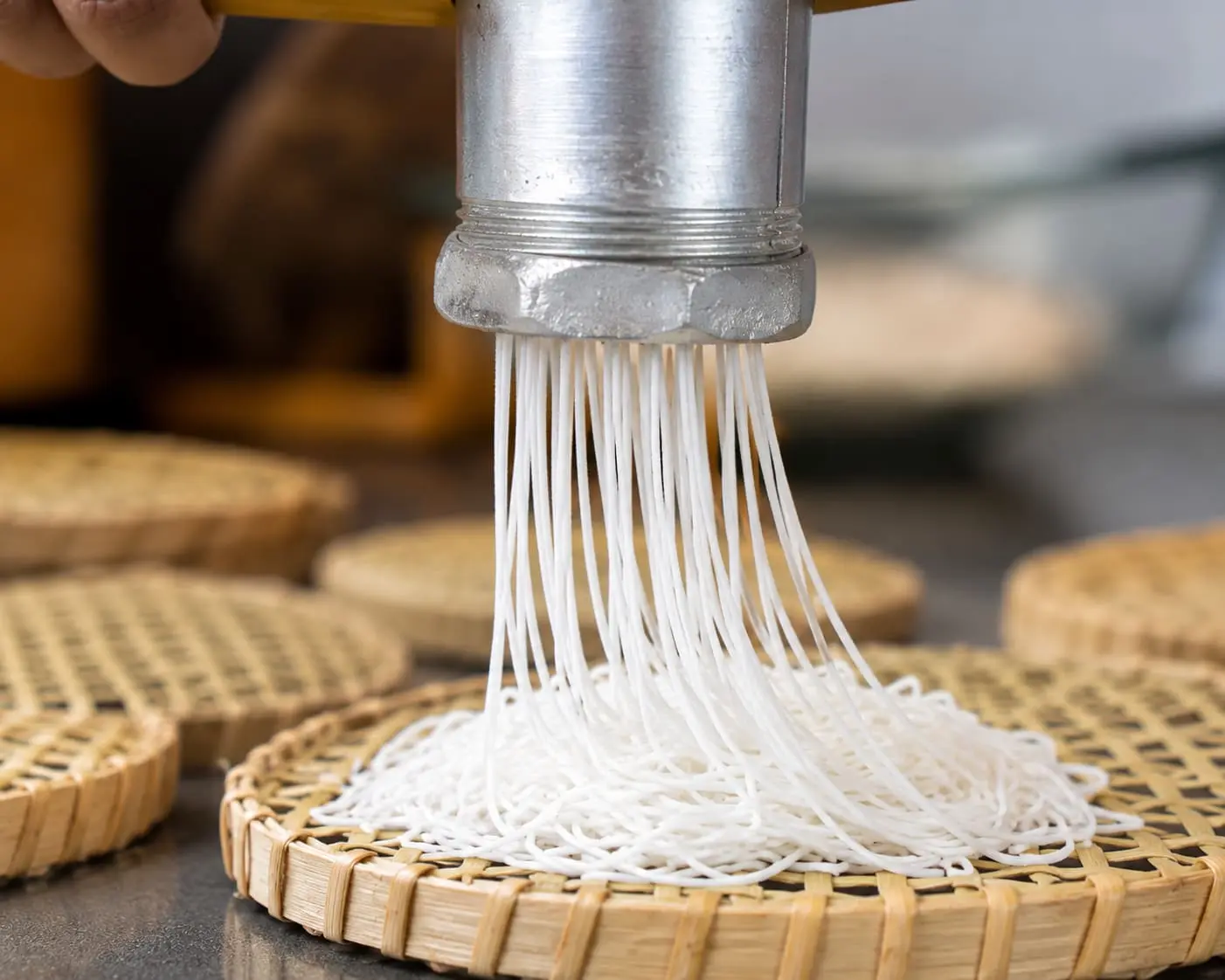
Can You Make String Hoppers at Home?
Absolutely.
The process may seem difficult the first time, but the basic technique is straightforward once you get used to it.
You’ll generally need:
The dough is usually the part that takes a little practice.
After a few attempts, you’ll begin to understand the consistency needed for smooth pressing.
And don’t worry if your first string hoppers aren’t perfectly round.
They’ll still taste good.
White String Hoppers and Red String Hoppers
Depending on where you shop, you may come across different types of string hopper flour.
White rice-based string hoppers are probably the version most people immediately recognise.
You may also find flour made using red rice or other variations.
This can change the colour, texture and flavour slightly.
Sri Lanka has a rich tradition of different rice varieties, so these variations are another way to explore the country’s everyday food culture.
We’ll look more closely at Sri Lankan rice varieties and how they’re used in another guide.
A Classic Sri Lankan String Hopper Meal
If you want to create a complete Sri Lankan meal at home, you don’t need to make ten different dishes.
Try this:
String Hoppers
That’s already a delicious meal.
If you want something more substantial, add:
Chicken Curry or Fish Curry
And if you prefer something creamy and mild:
Kiri Hodi
Now you have several flavours working together.
Soft.
Creamy.
Spicy.
Fresh.
Rich.
That’s one of the things that makes Sri Lankan food so enjoyable.
The meal isn’t always about one dish.
It’s about how several dishes work together on the same plate.
String Hoppers and Memories of Home
Sometimes a food isn’t special because it’s expensive or complicated.
It’s special because you’ve eaten it your whole life.
Maybe you remember someone standing in the kitchen pressing one string hopper after another.
Maybe you remember waiting for the next batch to come out of the steamer.
Or perhaps it’s the combination you remember most.
Warm string hoppers.
Dhal.
Pol Sambol.
A cup of tea afterwards.
For Sri Lankans living abroad, making those same foods can bring a little piece of home into an ordinary morning.
That’s why everyday ingredients like string hopper flour can mean more than you might expect.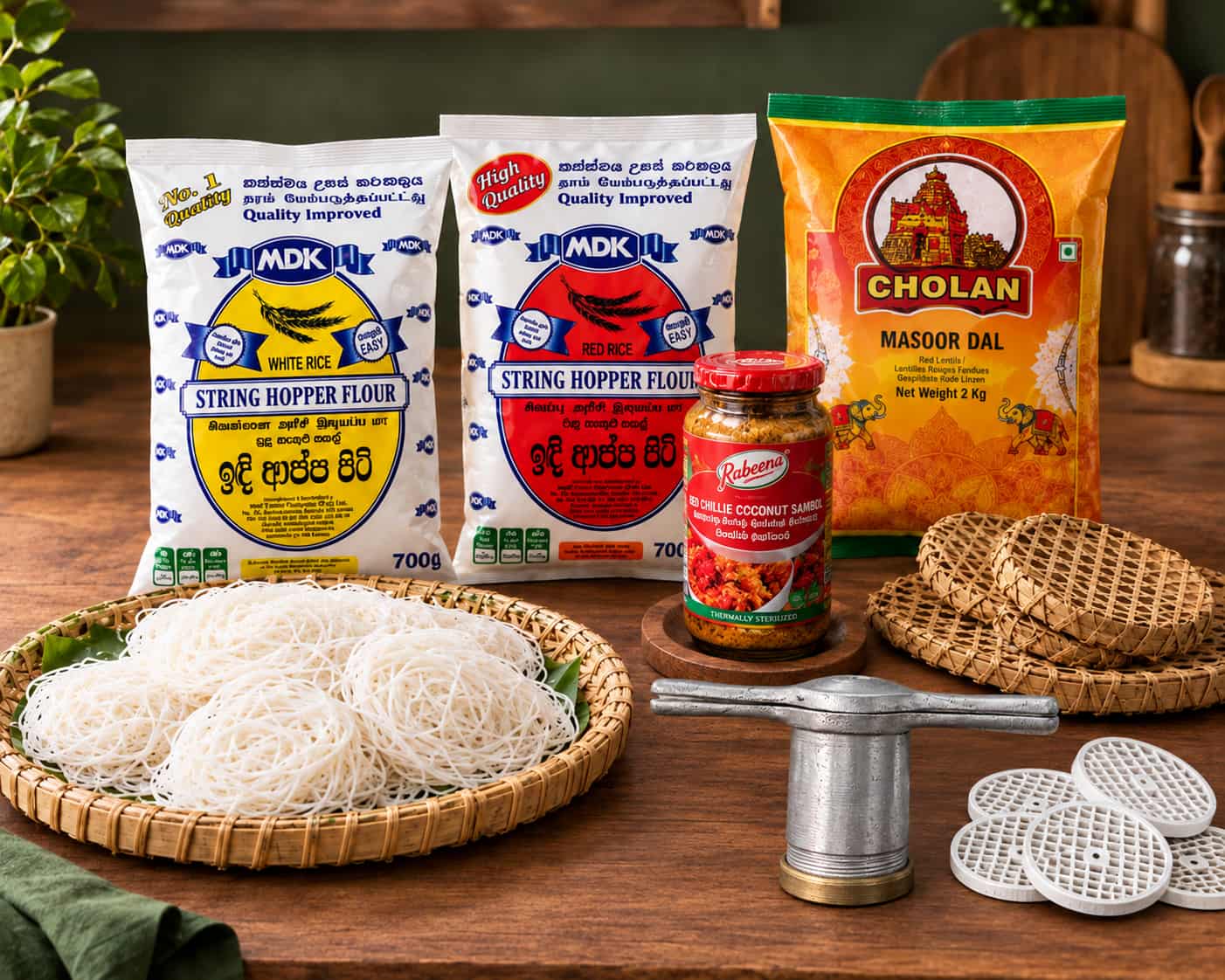
Finding String Hopper Flour in Germany and Europe
If you live in Sri Lanka, finding string hopper flour isn’t particularly difficult.
In Europe, it can be a different story.
An ordinary supermarket may carry rice flour, but it won’t necessarily stock the Sri Lankan products you’re familiar with.
At LankaMart, we’re working to make those everyday Sri Lankan ingredients easier to find.
Along with rice and flour products, you can explore Sri Lankan spices, coconut products, curry ingredients, snacks, tea and other familiar pantry essentials.
So whether you’re making string hoppers for Sunday breakfast or preparing a complete Sri Lankan dinner, you can find many of the ingredients you need in one place.
LankaMart delivers to customers in Germany, the Netherlands and other supported European countries.
Simple Food, Proper Sri Lankan Comfort
String hoppers aren’t complicated.
Flour.
Water.
A little salt.
Then steaming.
But place them next to dhal curry and Pol Sambol and they become something completely different.
It’s a meal many Sri Lankans immediately recognise.
It’s comforting.
It’s familiar.
And it’s one of the easiest ways to experience how Sri Lankan dishes work together.
If you’re just beginning to explore Sri Lankan food, put string hoppers on your list.
And if you grew up eating them?
Maybe it’s time for a proper string hopper breakfast this weekend.
Explore Sri Lankan rice, flour, spices and everyday cooking ingredients at LankaMart.
Frequently Asked Questions
What are Sri Lankan string hoppers?
String hoppers are thin strands of rice-flour dough pressed into small round nests and steamed. They are commonly eaten in Sri Lanka for breakfast or dinner with curries and sambols.
What are string hoppers called in Sri Lanka?
String hoppers are commonly known as indi appa in Sinhala and idiyappam in Tamil.
What are string hoppers made from?
They are traditionally made primarily from rice flour, water and salt. Specially prepared String Hopper Flour is also commonly used.
What do you eat with string hoppers?
Popular accompaniments include dhal curry, Pol Sambol, Kiri Hodi, chicken curry and fish curry.
Are string hoppers and hoppers the same?
No. String hoppers are steamed nests of thin noodle-like strands, while hoppers are bowl-shaped and prepared from a batter.
When are string hoppers eaten in Sri Lanka?
They are particularly popular for breakfast and dinner, although they can be enjoyed at other times as well.
Where can I buy String Hopper Flour in Europe?
Specialist Sri Lankan grocery stores such as LankaMart offer Sri Lankan rice and flour products and other cooking essentials online, with delivery to Germany, the Netherlands and other supported European countries.